
Stages of Breast Augmentation 2026: From Consult to Results
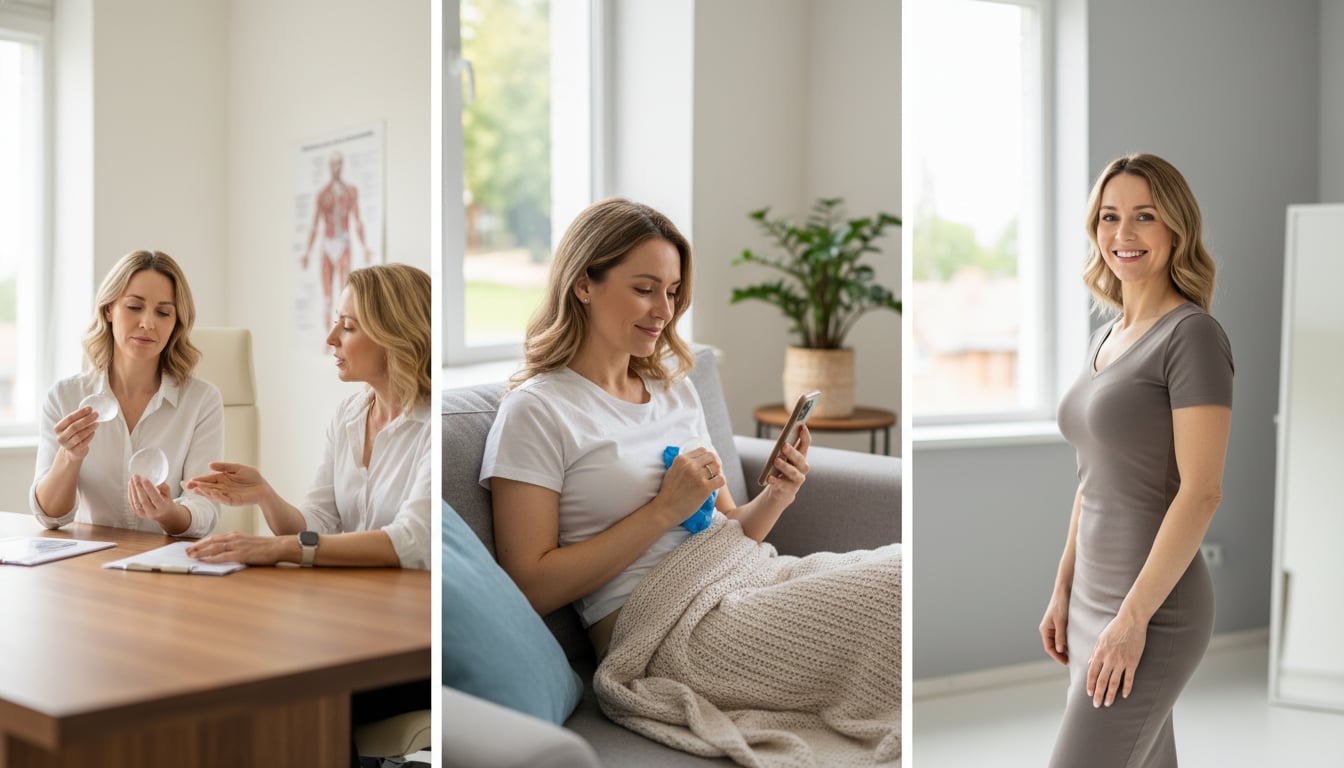
TL;DR
The stages of breast augmentation span from your initial consultation through surgery day, a multi-phase recovery, and years of ongoing implant care. Most patients reach near-final shape by three to six months, though larger or submuscular implants can settle for up to a year. Implants are not lifetime devices, and the FDA recommends imaging surveillance for silicone implants starting at five to six years after surgery, then every two to three years. Understanding each stage, and what your surgeon is checking at every follow-up, helps you plan realistically.
Most online guides treat “stages of breast augmentation” as if the journey begins on surgery day and ends a few weeks later. The reality is different. The full arc stretches from the moment you start researching surgeons all the way through decades of implant ownership. Each stage has its own milestones, its own set of questions, and specific things your surgical team is evaluating.
This guide walks through all eleven stages in plain language, with concrete timelines, definitions of terms and the kind of practical details (when you can sleep on your side, when you can lift your kids, what uneven settling actually looks like) that matter most to someone planning this procedure. For a deeper look at what a consultation visit involves, that resource is worth reviewing before your first appointment.
This article is for educational purposes and does not replace individualized medical advice. Always follow the specific recovery instructions provided by your plastic surgeon.
Stage 1: Consultation and Decision
What It Is
This is where you define your goals, learn whether you’re a good candidate, and start making the choices that shape every stage that follows. A thorough consultation covers your medical history, body measurements, sizing preferences, incision and implant pocket options, risks and alternatives, and a plan for long-term surveillance.
Key Decisions at This Stage
Incision location. The three most common options are inframammary (in the fold under the breast), periareolar (around the lower edge of the areola), and transaxillary (through the armpit). Each has trade-offs in scar visibility, implant placement flexibility, and potential effects on breastfeeding. The Mayo Clinic offers a visual overview of these incision sites.
Implant type and brand. During the consultation stage of breast augmentation, you’ll discuss round versus anatomical shapes, and specific brands. If you want to compare options, pages on Motiva implants and Natrelle breast implants explain the characteristics of each.
Implant pocket. Submuscular (under the chest muscle) or subglandular/subfascial (above the muscle, below the breast tissue). Submuscular placement often looks more natural in petite patients but can mean a longer settling period. Subglandular placement may recover faster but has different considerations.
What Many Patients Miss
The FDA now requires an enhanced Patient Decision Checklist as part of implant labeling. This checklist exists because implants are not lifetime devices, and setting that expectation early matters. One frequently overlooked topic at the consult stage: mapping your long-term imaging plan. For silicone implants, the FDA recommends a first ultrasound or MRI at five to six years post-op, then every two to three years after that. If your surgeon doesn’t bring this up, ask about it.
What this means for you: Come to your consultation with a list of questions, but also expect your surgeon to guide you through decisions you haven’t thought of yet. The best consultations feel like a conversation, not a sales pitch.
Stage 2: Pre-Op Preparation (1 to 3 Weeks Before Surgery)
What It Is
The preparation stage of breast augmentation is about getting your body and your home ready. This includes bloodwork and any needed imaging, medication and supplement holds (blood thinners, certain vitamins, herbal supplements), and stopping nicotine and limiting alcohol, all of which affect healing and anesthesia safety.
Practical Steps
Arrange for someone to drive you home and stay with you for at least the first 24 hours. Stock your recovery space: pillows for propping up in bed, easy-to-reach snacks, loose button-front shirts, and any prescriptions your surgeon has called in. Most patients experience 24 to 48 hours of immediate recovery followed by several days of reduced activity, so plan to be off your feet for that initial window.
Set realistic expectations about your return to work now, not after surgery. Desk workers commonly resume within five to ten days. Physically demanding roles often need two to four or more weeks, and sometimes a staged return. Planning ahead reduces stress during recovery.
What this means for you: The more you prepare before surgery, the smoother your first week will be. For visual learners, patient education videos can help you visualize what to expect.
Stage 3: Surgery Day
What Happens
Primary breast augmentation is performed under general anesthesia. The surgeon makes the incision (most commonly inframammary), creates the implant pocket, places the implant, closes the incision, and applies a supportive surgical bra or compression garment. The procedure itself usually takes one to two hours for a straightforward augmentation.
You wake up in the post-anesthesia care unit (PACU), where the team monitors your vitals and manages any pain or nausea. Once you meet discharge criteria, you go home with detailed at-home instructions. This monitoring period focuses on making sure you’re stable, comfortable, and clear on your care plan.
What Your Surgical Team Checks
Vital signs, pain and nausea control, initial incision appearance, and your ability to walk and keep fluids down. They’ll confirm you understand your medication schedule, activity restrictions, and when to call if something feels wrong.
What this means for you: Surgery day is mostly about trusting the process. You won’t remember much of it. The work you did in Stage 2 pays off here.
Stage 4: Immediate Post-Op (0 to 48 Hours)
What to Expect
Soreness and tightness across the chest are normal. Swelling and bruising begin immediately and will get worse before they get better. Short walks around your house are encouraged right away because early movement reduces the risk of blood clots. Drains are uncommon in straightforward augmentation cases.
Back-sleeping is standard during this stage. Most surgeons restrict lifting anything heavier than five to ten pounds and advise against overhead reaching. Your surgical bra stays on.
Red Flags to Watch For
Call your surgeon if you notice sudden, significant swelling on one side, fever above 101°F, chest pain or difficulty breathing, or incision drainage that is thick, discolored, or foul-smelling.
What this means for you: The first 48 hours feel the hardest for most patients, but this stage passes quickly. Pain medication, ice packs, and patience get you through.
Stage 5: Early Recovery (Days 3 to 7)
Typical Trajectory
Peak swelling usually hits around day two or three, and bruising is often worst by day three or four. By the end of the first week, most patients notice meaningful improvement in soreness. Many can reduce or stop prescription pain medication by days four to five.
Desk work is often possible near the end of week one if pain is controlled, though this varies. Practitioners report that desk workers commonly resume around days five to ten, while those in physical roles need significantly more time.
What Your Surgeon Checks (Week-One Follow-Up)
Incision healing, swelling patterns, early signs of fluid collection, and your pain management. This visit is also when your surgeon confirms whether you’re on track for the activity progression planned for weeks two and three. For a detailed day-by-day breakdown, the week-by-week post-op care guide covers each milestone.
What this means for you: Week one is about rest and gentle movement. Do less than you think you can. Overdoing it now can set back the stages of breast augmentation recovery that follow.
Stage 6: Weeks 2 to 3
Activity
Many patients resume light daily activity during this window, including progressive walking and gentle cardio as cleared by their surgeon. Avoid strenuous activity for at least two weeks, then gradually ramping up. Heavy lifting and intense chest exercises are still off-limits.
Sleep Position
Side-sleeping timing varies among surgeons. Many allow trial side-sleeping around four to eight weeks if it’s comfortable and doesn’t stress the incisions. Online communities report wide variability in guidance here, so follow your own surgeon’s protocol rather than what someone else’s surgeon told them.
A Note on Combined Procedures
Some patients undergoing breast augmentation with a lift will have a different (usually slightly longer) recovery trajectory during this stage due to additional incisions and tissue work. If you had a combined procedure, your surgeon’s timeline takes priority over the general ranges listed here.
What this means for you: Weeks two and three are when you start feeling more like yourself, but patience still matters. Pushing too hard on exercise can affect implant position.
Stage 7: Weeks 4 to 6 (Functional Recovery)
The Big Milestone
For many patients, this is the point where daily life returns to something close to normal. Most surgeons clear a return toward full exercise by around four to six weeks, starting with lower body and cardio before reintroducing chest work. Scars are still immature at this stage, so protecting them from sun exposure is important.
“Drop and Fluff” Becomes Visible
This is one of the most talked-about stages of breast augmentation recovery. “Drop and fluff” refers to the months-long settling process where implants that initially sit high and feel firm gradually descend into a more natural position while surrounding tissues soften. By weeks six to twelve, many patients notice meaningful changes in shape and softness. Larger implants and submuscular placement typically take longer.
What Your Surgeon Checks (Six-Week Follow-Up)
Implant position and symmetry, incision maturation, exercise clearance, and any early signs of capsular contracture (the scar capsule around the implant tightening). This visit is a good time to ask about scar care products or treatments.
What this means for you: Resist the urge to judge your results at week four. The implants are still moving, and the final shape is months away.
Stage 8: Months 2 to 3
Settling Continues
Noticeable softening and shape improvement continue. Many patients return to full training once cleared.
Stage 9: Months 3 to 6
Near-Final Position
Many patients see near-final implant position by three to six months. The breast tissue has softened around the implant, the lower pole has filled out, and the overall shape looks more natural than it did at six weeks. Scars begin to pale and flatten but are still actively remodeling.
What Your Surgeon Checks
This follow-up focuses on early detection of capsular contracture and any unresolved issues. Your surgeon will also calibrate your scar care routine at this visit.
What this means for you: Months three to six is when most patients start genuinely loving their results. If something still feels off, this is the right time to have a direct conversation with your surgeon.
Stage 10: Months 6 to 12+ (Final Results and Scar Maturation)
Scar Remodeling
Scars go through three biological phases: inflammation, proliferation, and remodeling. The remodeling phase lasts months to years, and many incision scars continue fading and flattening beyond twelve months. Maximal scar strength is well below that of normal skin, and redness can persist for months in some patients. UV avoidance during this entire window is one of the most effective things you can do for scar appearance.
What Final Results Look Like
By this point, the breast augmentation stages of healing are largely complete. The implants have settled, the tissue has adapted, and the shape you see at twelve months is close to what you’ll live with going forward (assuming no complications). Some patients, especially those who had very large implants or revisions, may see subtle changes for a few more months.
What this means for you: Be patient with your scars. They will almost certainly look better at eighteen months than they do at six.
Stage 11: Long-Term Maintenance (Years)
Implants Are Not Lifetime Devices
This is one of the most important things to understand about any stage of breast augmentation ownership. That doesn’t mean your implants will definitely need replacing on a fixed schedule, but it does mean ongoing follow-up matters.
FDA Imaging Surveillance Schedule for Silicone Implants
Even without symptoms, the FDA recommends:
First screening: Ultrasound or MRI at 5 to 6 years post-op
Ongoing screening: Every 2 to 3 years after that
Build these into your calendar the same way you schedule mammograms. Silent rupture (a rupture you can’t see or feel) is the main reason routine imaging exists.
BIA-ALCL Awareness
Breast implant-associated anaplastic large cell lymphoma (BIA-ALCL) is a rare cancer of the immune system, not breast cancer, that has been linked primarily to textured implants. Signs include late-onset swelling, fluid collection (seroma), asymmetry, or a mass near the implant.
When to Consider Revision
Reasons for revision breast augmentation include capsular contracture, implant rupture, malposition, size change preference, or aesthetic changes over time. Some patients opt for an implant exchange rather than a full revision when the only goal is updating the implant itself.
What this means for you: Getting breast implants is a long-term relationship, not a one-time event. The maintenance stage of breast augmentation is the longest stage of all, and it deserves the same attention as the recovery stages.
What Your Surgeon Checks at Each Follow-Up
Visit | Typical Timing | Focus Areas |
|---|---|---|
First post-op | ~1 week | Incision healing, swelling, fluid, pain management |
Second post-op | ~6 weeks | Implant position, symmetry, exercise clearance, early contracture screening |
Mid-term | 3 to 6 months | Drop and fluff progress, scar care calibration, sensation, contracture check |
Annual | Yearly | Overall implant health, imaging planning, any changes in shape or feel |
Mini-Glossary of Key Terms
Drop and fluff: The gradual process where high, firm implants descend and tissues soften over weeks to months. Significant changes appear by six to twelve weeks; final settling may take three to six months or longer depending on implant size and pocket placement. Each side settles at its own pace.
Scar maturation: The biological remodeling process that continues for months after incision. Scars transition from red and raised to pale and flat. Sun protection accelerates this process.
Imaging surveillance: The FDA’s recommended screening schedule for silicone implants, starting with ultrasound or MRI at five to six years post-op and repeating every two to three years, even with no symptoms.
Submuscular vs. subglandular: Two common implant pocket options. Submuscular places the implant beneath the pectoral muscle; subglandular places it above the muscle but below breast tissue. Each affects recovery timelines and the duration of the drop-and-fluff process differently.
Frequently Asked Questions
When can I sleep on my side after breast augmentation?
Most surgeons allow trial side-sleeping around four to eight weeks post-op, once incisions have healed enough and the position is comfortable. This timeline varies significantly by surgeon, so follow your own provider’s protocol. Online communities confirm that guidance on this differs widely from one practice to another.
When do implants start to feel natural?
As the drop-and-fluff process progresses and tissues soften around the implant, most patients report a more natural feel by three to six months. Submuscular implants often take longer to feel “settled” than subglandular ones. The sensation of something foreign on the chest gradually diminishes during the middle stages of breast augmentation recovery.
When can I return to work after breast augmentation?
It depends on your job. Desk workers commonly return within five to ten days. Physically demanding roles that involve lifting, pushing, or overhead work often require two to four weeks or more, sometimes with a staged return. Always get clearance from your surgeon before resuming.
When can I exercise again?
Walking is encouraged right away. Many patients are cleared for full workouts, including chest exercises, by four to six weeks. Ask your surgeon when you are cleared for workouts.
How long do breast implants last?
There is no set expiration date, but implants are not lifetime devices. The risk of complications (rupture, contracture, malposition) increases the longer they’re in place. The FDA recommends periodic imaging for silicone implants and ongoing follow-up regardless of implant type.
What is capsular contracture and how do I know if I have it?
Capsular contracture is when the scar tissue capsule that naturally forms around any implant tightens and hardens. Mild firmness is normal. If your breast becomes noticeably hard, looks distorted, or hurts, contact your surgeon. Early detection gives you more treatment options.
How often do I need imaging after getting silicone implants?
The FDA recommends a first ultrasound or MRI at five to six years post-op, then every two to three years after that, even if you have no symptoms. This screens for silent rupture, which is not something you can detect on your own.
Ready to Map Out Your Timeline?
Understanding the stages of breast augmentation is the first step. The next step is a conversation with a surgeon who can tailor these milestones to your body, your goals, and your life. Explore more about breast augmentation in Denver or browse the full resources page for checklists, videos, and additional reading. When you’re ready, schedule a consultation.