
A New Chapter. Thoughtfully Designed.
Breast implant exchange is a surgical procedure designed to replace existing breast implants with new ones. Whether you are experiencing changes in your body, want a different size or shape, or are addressing implant-related concerns, implant exchange offers the opportunity to refine, restore, and reimagine your results.
I am Dr. Leela, a Harvard Trained Plastic Surgeon, and I specialize in producing natural-looking, elegant results that are specifically tailored to complement your individual body structure and lifestyle. Every stage of this journey is centered entirely on you—your personal story, your aesthetic goals, and your overall well-being—and I consider it a privilege to be a partner in this transformative experience.

What Is Breast Implant Exchange?
Breast implant exchange (also known as breast implant replacement) involves removing your current implants and replacing them with new ones. Some patients choose to maintain a similar look, while others elect to:
- Change implant size (larger or smaller)
- Transition from saline to silicone
- Update older implants
- Improve shape or projection
- Address implant rupture or deflation
- Correct capsular contracture
- Refine results after weight changes, pregnancy, or aging
For some patients, implant exchange is combined with a breast lift to restore optimal position and contour.
Why Patients Choose Implant Exchange
Over time, aesthetic goals and bodies naturally evolve. Common reasons patients seek breast implant revision include:
- Desire for a more natural look
- Lifestyle changes
- Implant aging (most implants are not considered lifetime devices)
- Changes after pregnancy or breastfeeding
- Rippling or visible implant edges
- Firmness or discomfort from scar tissue (capsular contracture)
Every consultation begins with a thoughtful discussion of your current concerns and your long-term aesthetic goals.

About the Procedure
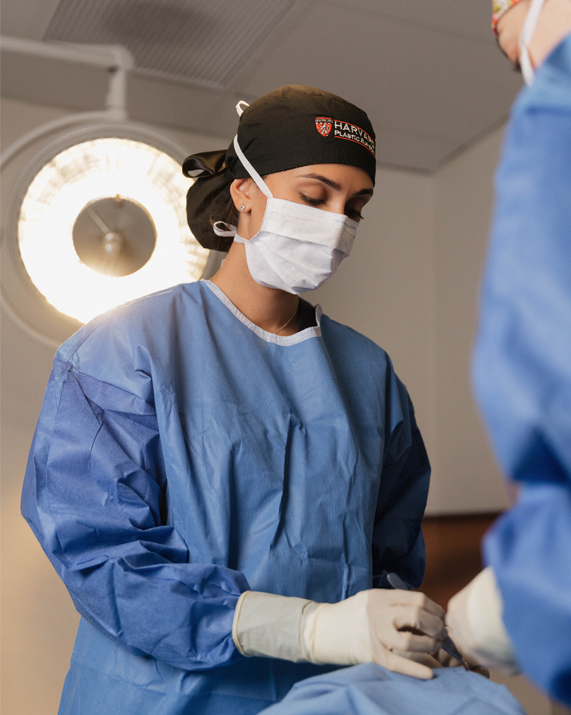
Breast implant exchange is performed under general anesthesia in an accredited surgical facility. The procedure begins with careful removal of the existing implants. Whenever possible, previous incision sites are utilized to minimize additional scarring.
Depending on your needs, the surgery may involve:
- Removal and replacement of the current implants
- Capsulectomy (removal of scar tissue) or capsulotomy (scar tissue release)
- Reshaping or reinforcing the implant pocket
- Adjustment of implant position
- Placement of new implants with updated size, profile, or technology
- Combination with a breast lift for improved contour and position
Meticulous surgical technique is used to optimize symmetry, support soft tissue, and create a balanced, natural result. Every detail — from pocket control to implant selection — is tailored to achieve long-term structural integrity and aesthetic refinement.

Is Implant Exchange Right for You?
You may be a candidate for breast implant exchange if you:
- Currently have breast implants
- Are in good overall health
- Have realistic expectations
- Desire aesthetic refinement or need implant replacement
A personalized consultation allows us to determine the safest and most effective plan for your goals.
What to expect at your implant exchange consultation:
Implant exchange surgery is highly individualized. During your consultation, we evaluate:
- Implant type and size
- Implant placement (above or below the muscle)
- Skin quality and breast tissue support
- Degree of scar tissue (if present)
- Whether a lift or pocket revision is needed
Advanced techniques allow us to reshape the implant pocket, reinforce tissue support, and optimize symmetry when necessary.
Recovery and Healing
Recovery varies depending on whether additional procedures (such as a lift or capsular contracture correction) are performed. In general:
- Most patients return to light activity within several days
- Exercise is resumed gradually over 4–6 weeks
- Swelling continues to improve over several months
Detailed post-operative instructions are provided to support a smooth recovery and optimal healing.
Breast Implant Exchange FAQs
How do I know if I need a breast implant exchange?
You may benefit from breast implant exchange if you notice changes in shape, firmness, symmetry, or overall appearance. Common reasons include implant rupture, capsular contracture (scar tissue tightening), visible rippling, or simply a desire to change size or style. A consultation allows us to evaluate your implants and determine the best course of action.
How long do breast implants last?
Breast implants are not considered lifetime devices. While many patients enjoy their implants for 10–20 years or longer, some require replacement sooner due to rupture, deflation, scar tissue, or aesthetic preference changes. Implant exchange is performed when medically indicated or personally desired.
Can I change my implant size during an exchange?
Yes. Many patients choose to go larger, smaller, or transition to a different implant profile. We will review your goals, body proportions, and tissue support to determine the most balanced and natural-looking option.
Will I need a breast lift with implant exchange?
Not always. Some patients benefit from combining implant exchange with a breast lift, especially if there has been skin stretching, weight changes, or pregnancy. A lift improves nipple position and overall breast contour when needed. At your consultation we can discuss if a breast lift is appropriate.
What happens if I have capsular contracture?
Capsular contracture occurs when scar tissue around the implant tightens, causing firmness or distortion. During implant exchange, the scar tissue can be released (capsulotomy) or removed (capsulectomy), and the implant pocket may be adjusted to improve comfort and shape.
What is recovery like after implant exchange?
Recovery depends on whether additional procedures are performed. Most patients experience swelling and soreness for several days. Light activity is typically resumed within a week, with exercise restricted for approximately 4–6 weeks. Detailed post-operative instructions are provided to ensure optimal healing.
Will my scars be worse after implant exchange?
In many cases, the original incision is used, which helps avoid additional scarring. If a lift is performed, additional incisions may be necessary. All incisions are carefully planned to heal as discreetly as possible.
Request a Consultation
Fields marked (*) are required