
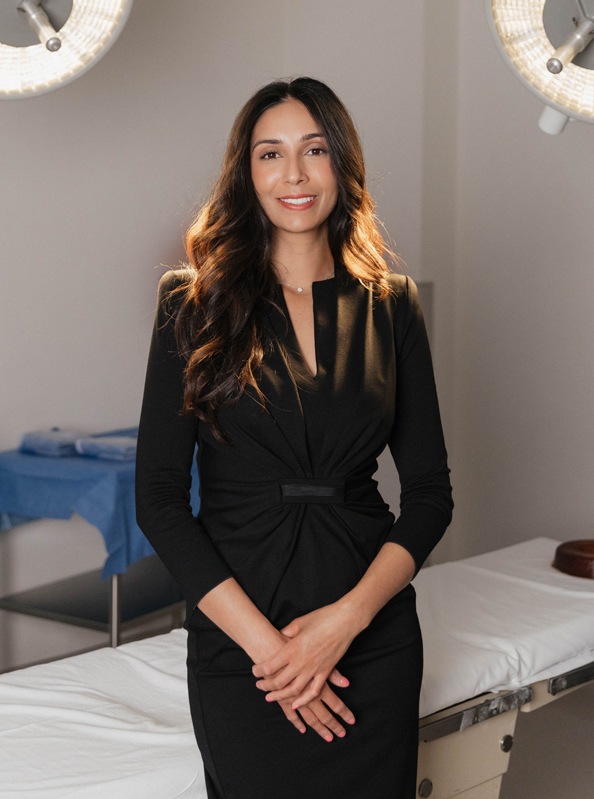
and her Plastic Surgery practice.
Dr. Leela Mundra
Known to her patients as “Dr. Leela,” Dr. Leela Mundra is a Harvard-Trained Female Plastic and Reconstructive Surgeon who was driven to medicine at a young age. Her passion for plastic and reconstructive surgery was sparked during a formative trip to India, where she witnessed a surgeon care for a burn victim. That moment solidified her passion to pursue a career that blends artistry and precision.
After being accepted into medical school at 17, Dr. Leela earned her medical degree and a full scholarship for the prestigious combined seven-year medical program at the University of Miami, carving her pathway into medicine. She was then accepted into the fiercely competitive Integrated Plastic Surgery Residency at the University of Colorado, where she completed six years of intensive surgical training. She then went on to complete the prestigious Harvard Aesthetic Surgery Fellowship—an elite program that accepts only one applicant per year—where she further refined her artistry in advanced facial and body aesthetic techniques.
Beauty is deeply personal and is different for each and every individual. That is why Dr. Leela founded Leela Mundra MD to offer an authentic boutique plastic surgery experience rooted in compassion, technical excellence, and bespoke care. Her practice combines the best of surgical precision with non-surgical artistry to create natural-looking results tailored to each individual.
Dr. Leela is deeply committed to her patients’ long-term wellness. She believes that surgery is only one part of the journey—and that true transformation requires attentive, ongoing support before, during, and long after the procedure. Her patients trust her not only for her expertise, but for the warmth, honesty, and respect she brings to every interaction.
As she often says: “Beauty is in the details.” At Leela Mundra MD, those details are never overlooked.
Outside of the OR, you’ll find Dr. Leela hiking fourteeners during the summer and skiing during the winter. She’s passionate about a well-rounded lifestyle and loves good sushi, long runs and country music.

Useful Links



Training
- Aesthetic Surgery Fellowship, 2024-2025 Beth Israel Deaconess Medical
Campus- Harvard
Medical School Boston, MA - Integrated Plastic and Reconstructive Surgery, Residency, 2018-2024
University of Colorado School of Medicine
Aurora, CO
Education
- Doctor of Medicine, 2014-2018 Research Distinction
University of Miami Miller School of Medicine
Miami, FL - Bachelor of Arts, 2010-2013 International Studies, Anthropology,
Concentration: Global Health
Hammond Full-Tuition Academic Scholarship
Recipient
Honors Program in Medicine (7-year Integrated BA/MD program)
Magna Cum Laude
University of Miami
Coral Gables, FL
Volunteer & Philanthropy
- Volunteer, The Delores Project, Denver, CO 2022-2024
- Volunteer, Shree Chhotubhai A. Patel Hospital and Community Health Center, Gujarat, India, 2021
- Elected Member, Catalyst Society, Mile High United Way, 2019-2020
- Board Member, Health Impact Council, United Way Miami-Dade, January 2015- 2018
- Volunteer, Innovating Health International (IHI), Haiti, 2016
Publications
View all Publications
Peer- Reviewed Publications:
Lee AD, Hale EW, Mundra L, Le E, Kaoutzanis C, Mathes DW. The heart of it all: Body dysmorphic disorder in cosmetic surgery. J Plast Reconstr Aesthet Surg. 2023 Dec;87:442-448. doi: 10.1016/j.bjps.2023.10.068. Epub 2023 Oct 18. PMID: 37944455.
Garoosi K, Mundra L, Jabbari K, Winocour J, Iorio ML, Mathes DW, Kaoutzanis C. Comorbid Conditions and Complications in Body Contouring Surgery: A Retrospective Review. Aesthet Surg J Open Forum. 2023 Aug 31;5:ojad080. doi: 10.1093/asjof/ojad080. PMID: 37711766; PMCID: PMC10499002.
Mundra L, Garossi K, Iorio M, Mathes D, Winocour J, Kaoutzanis C. Opioid-Prescribing Patterns in Body Contouring Surgery. Aesthet Surg J. 2023 Aug 17; 43 (9):978-985. doi: 10.1093/asj/sjad117. PMID: 37185594.
Makhoul AT, Morrison SD, Mundra LS, Kaoutzanis, C, Satterwhite T, Winocour JS, Al Kassis S, Brolet BC. Improving Gender-Affirming Surgery Terminology: A multicenter Patient Survey. Ann Plast Surg. 2022 Jun 1; 88 (5 Suppl 5): S478-S480. doi: 10.1097/SAP.0000000000003122. Epub 2022 Feb 18. PMID: 35690942.
Mundra LS, Tucker NJ, Parry JA. Urinary bladder matrix grafting versus flap coverage for acute or infected wound defects in orthopaedic trauma patients. J Orthop Trauma. 2022 May 17. doi: 10.1097/BOT.0000000000002406. PMID: 35580325.
Louiselle AE, Niemiec S, Azeltine M, Mundra L, French B, Zgheib C, Liechty KW. Evaluation of skin care concerns and patient’s perception of the effect of NanoSilk Cream on facial skin. J Cosmet Dermatol. 2022 Mar. doi: 10.1111/jocd.14198. Epub 2021 May 2. PMID: 33934488.
Mundra LS, Lowe KM, Khechoyan DY. Alveolar Bone Graft Timing in Patients With Cleft Lip & Palate. J Craniofac Surg. 2022 Jan-Feb 01;33(1):206-210. doi: 10.1097/SCS.0000000000007890. PMID: 34967522.
Kaoutzanis C, Mundra LS. Commentary on: Evidence of Browning of White Adipocytes in Poorly Survived Fat Graft in Patients and Browning of White Adipocytes in Fat Grafts Associated With Higher Level of Necrosis and Type 2 Macrophage Recruitment. Aesthet Surg J. 2021 Jul 14;41(8):NP1102-NP1104. doi: 10.1093/asj/sjab171. PMID: 33861302.
Mundra LS, Iorio ML. Wound Complications in Revision Total Knee Arthroplasty: An Analysis of ACS-NSQIP. Plastic and Reconstructive Surgery Global Open. 8(7S): 8, July 2020.
Husain, TM; Salgado CJ, Mundra LS, Perez C, AlQattan HT, Bustillo E, Perex R, Garri JI, Abdominal Etching: Surgical Technique and Outcomes. Plast Reconstr Surg. 2019 Apr;143(4):1051-1060. doi: 10.1097/PRS.0000000000005486. PMID: 30921120.
Mundra LS, Rubio GA, AlQattan HT, Thaller SR. Panniculectomy Outcomes in Patients with End-Stage Renal Disease in Preparation for Renal Transplant. Aesthetic Plast Surg. 2018 Jun;42(3):633-638. doi: 10.1007/s00266-017-1043-4. Epub 2017 Dec 21. PMID: 29270695.
Mundra LS, AlQattan HT, Janette MG, Patete C, Thaller SR. Iatrogenic Conchal Defect Secondary to Auricular Cartilage Graft. J Craniofac Surg. 2018 Jun;29(4):e402-e404. doi: 10.1097/SCS.0000000000004407. PMID: 29481517.
AlQattan HT, Mundra LS, Rubio GA, Thaller SR. Abdominal Contouring Outcomes in Class III Obesity: Analysis of the ACS-NSQIP Database. Aesthetic Plast Surg. 2018 Feb;42(1):13-20. doi: 10.1007/s00266-017-0976-y. Epub 2017 Oct 12. PMID: 29026962.
Rubio GA, Mundra LS, Thaller SR. Association of Autoimmune Connective Tissue Disease With Abdominoplasty Outcomes: A Nationwide Analysis of Outcomes. JAMA Surg. 2018 Feb 1;153(2):186-188. doi: 10.1001/jamasurg.2017.3796. PMID: 29094151; PMCID: 5838865.
Ray JJ, Alvarez AD, Ulbrich SL, Lessner-Eisenberg S, Satahoo SS, Meizoso JP, Karcutskie CA 4th, Mundra LS, Namias N, Pizano LR, Schulman CI. Shake It Off: A Randomized Pilot Study of the Effect of Whole Body Vibration on Pain in Healing Burn Wounds. J Burn Care Res. 2017 Jul/Aug;38(4):e756-e764. doi: 10.1097/BCR.0000000000000481. PMID: 28644208.
Ray JJ, Meizoso JP, Allen CJ, Teisch LF, Yang EY, Foong HY, Mundra LS, Namias N, Pizano LR, Schulman CI. Admission Hyperglycemia Predicts Infectious Complications After Burns. J Burn Care Res. 2017 Mar/Apr; 38(2):85-89. doi: 10.1097/BCR.0000000000000381. PMID: 27355659.
Mundra LS, Maranda EL, Cortizo J, Augustynowicz A, Shareef S, Jimenez JJ. The Salem Witch Trials- Bewitchment or Ergotism. JAMA Dermatol. 2016 May 1;152(5):540. doi: 10.1001/jamadermatol.2015.4863. PMID: 27168210.
Book Chapters:
Mundra LS, Sergesketter A, Lin S. Superior Pedicle. In: Expert Techniques in Aesthetic Surgery. Elsevier, 2024.
Mundra LS, Taritsa I, Lin S. Alar Base. In: Expert Techniques in Aesthetic Surgery. Elsevier, 2024.
Mundra LS, Slavin, S. Necklift. In: Expert Techniques in Aesthetic Surgery. Elsevier, 2024.
Mundra LS, Iorio MI. Dorsal and Palmar Vascularized Distal Radius Bone Grafting for Scaphoid and Lunate Reconstruction. In: Operative Techniques in Orthopaedic Surgery. 2021.
Novo RC, Mundra LS, Miller N, Salgado CJ. Liposuction and Lipofilling for Treatment of Symptomatic Silicone Toxicosis of the Gluteal Region In: Liposuction- Principles and Practice. Springer 2015.
Menezes, L., Morano, J. Mundra, L. Human Papillomavirus. In: Global Virology I: Identifying and Investigating Viral Diseases. Springer; 2014.
Core Pillars of Leela Mundra MD
Rather than a traditional mission statement, I’ve chosen to define my plastic surgery practice through a set of core pillars. These values reflect the foundation of our work and the patient-centered experience we strive to provide every day—focused on privacy, personalized care, natural-looking results, and long-term trust. Whether you’re seeking facial rejuvenation, body contouring, or breast enhancement, our boutique practice is rooted in integrity and tailored to your unique goals.
-
1. Privacy & Discretion
Embedded in our culture is patient confidentiality. From consultation to post-operative care, our environment is designed to be intimate, secure, and respectful of your personal journey.
-
2. Premier Patient Care
Personalization, respect and empowerment define our patient approach. We deliver concierge care grounded in clinical excellence. Every touchpoint—from your first call to follow-up—is designed to achieve a safe and truly tailored experience.
-
3. Aesthetic Integrity
Our surgical philosophy is balance, natural beauty, and long-term results. We approach each procedure with a keen artistic eye, backed by evidence-based techniques and a deep respect for form and function.
-
4. Grounded in Purpose
This practice was formed from a lifelong passion to help patients feel the most confident version of themselves. Every aspect of our approach is driven by intention, rooted in empathy, and aligned with a purpose greater than aesthetics alone: to honor the individual and create lasting impact through meaningful care.
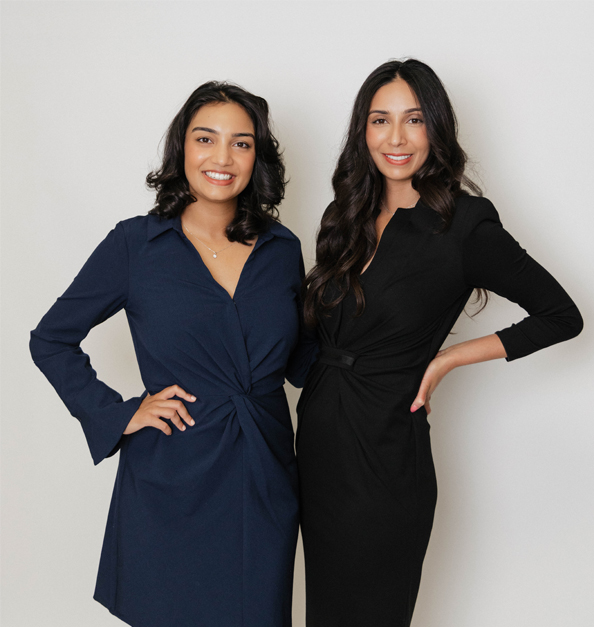
Meet the TeamSisters with a Pursuit for Passion
We’re sisters! Dr. Leela and Aleesha founded Leela Mundra MD with deep love, purpose, and drive for innovation.
As sisters, we’ve supported each other through every chapter—and now, we bring that same dedication and connection to the care of our patients.
With a shared passion for beauty, wellness and precision, we chose to embark on this journey—together.
At the heart of the practice is the belief that beauty lives in the details. From your first call to your final follow-up, our mission is to deliver a deeply personalized experience, grounded in trust, integrity, and care.
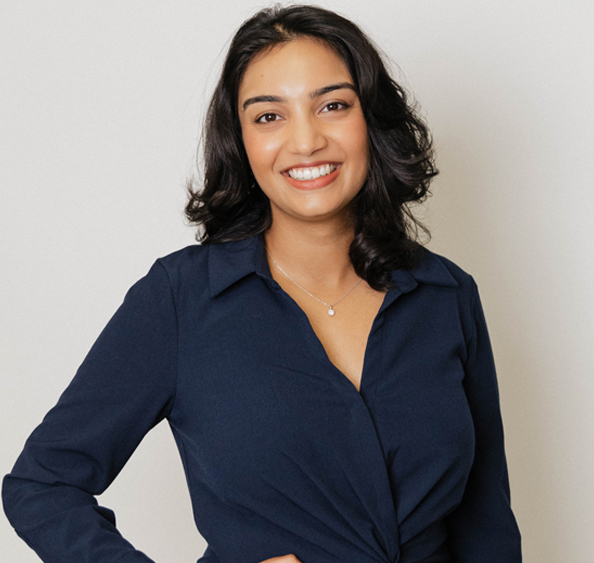
Aleesha MundraChief Operating Officer
Aleesha charted her path in finance. She graduated at the top of her class from the University of Florida before moving to San Francisco, where she spent over seven years in the financial industry. Most notably, she served as a multi-asset Portfolio Manager at some of the world’s leading asset management firms, including BlackRock.
Driven by a passion for beauty, entrepreneurship, and creating meaningful experiences, Aleesha decided to transition into the world of aesthetics to grow Leela Mundra MD, a boutique plastic surgery practice alongside her sister Dr. Leela. Today, she brings her strategic mindset and high standards of client service to the practice, ensuring that every patient receives an exceptional, discreet, and personalized experience.
Outside of the office, you’ll find Aleesha cheering on her favorite F1 and football teams, sampling sweet treats, and soaking in the magic of the Rocky Mountains.
Request a Consultation
Fields marked (*) are required