
Breast Augmentation Post Op Bra: 2026 Timeline & Tips
TL;DR
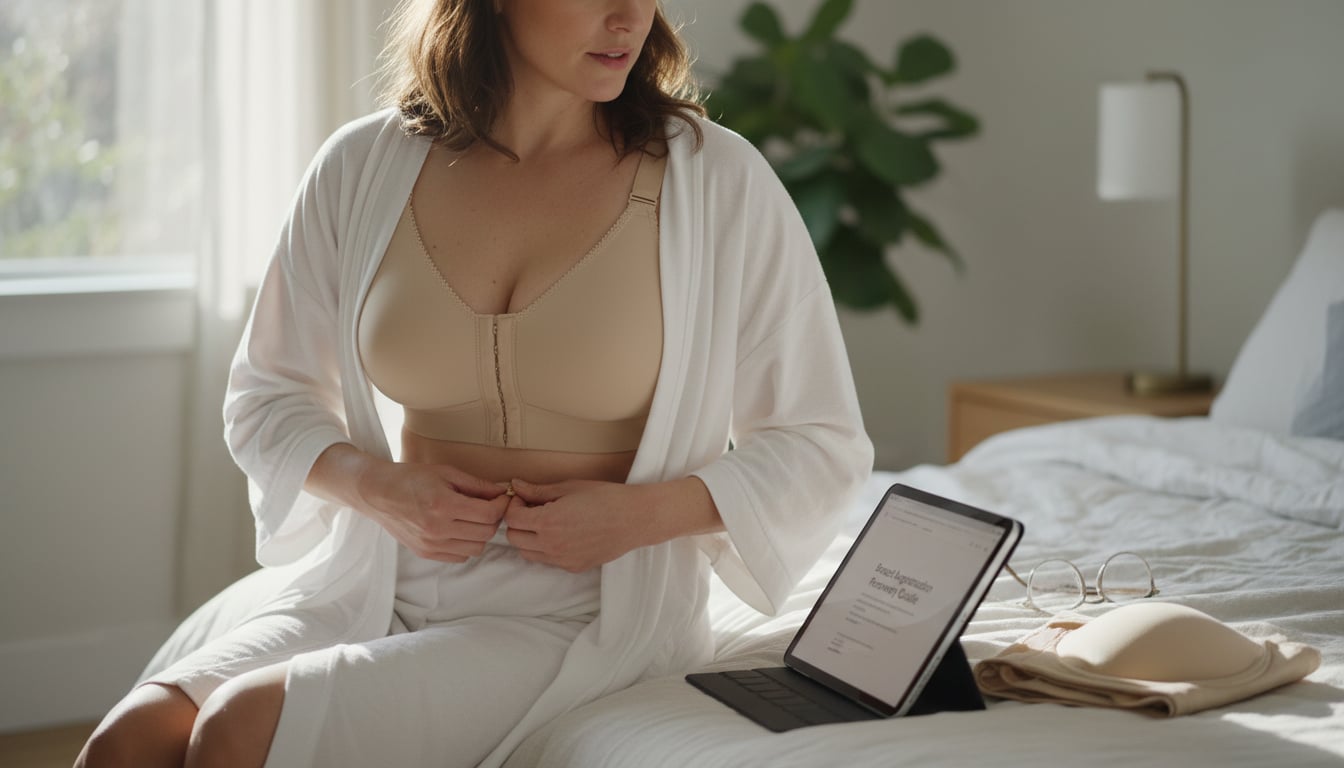
A breast augmentation post-op bra is a medical-grade, wire-free, front-closure garment designed to support healing, reduce swelling, and help implants settle into their final position. Most surgeons recommend wearing one 24/7 for the first two to six weeks, then transitioning through supportive sports bras before eventually returning to regular bras. No underwire for at least six weeks. Always follow your specific surgeon’s instructions, because protocols vary.
The bra you wear after breast augmentation matters more than most patients expect. It’s not about comfort alone (though that counts). The right garment at the right time protects incisions, manages swelling, and directly influences how your implants settle over the following months.
Yet the terminology gets confusing fast. Post-op bra, compression bra, surgical bra, compression band, sports bra. Surgeons use these terms loosely, and patients are left guessing whether they all mean the same thing (they don’t).
This guide defines every garment and recovery term you’ll encounter after breast augmentation, explains the purpose behind each one, and maps out the timeline from surgery day to full bra freedom.
What Is a Post-Op Bra?
A breast augmentation post-op bra is a medical-grade support garment, typically provided or specified by the surgeon, that patients wear immediately after surgery. According to the American Society of Plastic Surgeons, it resembles a sports bra but is a special, medical-grade garment often made from nylon or elastic, designed to provide gentle and regulated pressure to the surgical site.
This is not something you shop for in advance like a regular bra. Your surgeon will either hand you one after the procedure or give you specific guidance on what to buy.
The key features that make it medical-grade:
Front closure. You’ll have limited arm mobility for the first week or two. Reaching behind your back to clasp a bra is not realistic. Front zippers, hooks, or Velcro closures solve this.
Wire-free design. The most common incision site for breast augmentation is the inframammary fold, the crease directly beneath the breast. That’s exactly where underwire sits. Wire-free construction protects this incision during healing.
Adjustable straps and band. Swelling changes daily, sometimes significantly. A post-op bra needs to accommodate those fluctuations without becoming too loose or too tight.
Soft, breathable fabric. Medical-grade nylon or elastic that stretches, wicks moisture, and won’t irritate sensitive skin or incision sites.
Expandable cups. Some models include pockets for drainage tubes or ice packs, though this depends on the surgical approach.
The purpose goes beyond comfort. A proper post-op bra holds implants in the correct position during early healing, reduces fluid accumulation, and minimizes movement that could stress incisions.
Post-Op Bra vs. Compression Bra vs. Sports Bra
This is the single biggest point of confusion for patients, and almost no online guide addresses it well. These three garments are different. Knowing the differences matters because wearing the wrong one at the wrong time can affect your results.
Surgical / Post-Op Bra
A medical device designed for recovery. It supports each breast individually with gentle, adjustable compression. The fit can be customized as swelling changes. Front closure is standard.
Compression Bra
Often used interchangeably with “surgical bra,” but it’s a broader category. Medical-grade compression garments are made from high-quality, breathable, durable nylon or elastic so they can stretch, making the healing process much more comfortable. Some surgeons prescribe true compression; others prefer a softer approach. One Scottsdale practice notes that they use only a soft cotton surgical support bra rather than a full compression garment, finding it comfortable and adequate without the risks of excessive pressure.
Sports Bra
Athletic wear, not a medical device. Here’s the critical distinction that a surgeon-written comparison highlights: sports bras compress both breasts together with strong, uniform compression, while surgical bras provide gentle, adjustable compression supporting each breast individually. Wearing a sports bra too early after augmentation can push implants inward or upward, interfere with the settling process, increase incision irritation, and cause uncontrolled swelling.
Bottom line: Your surgeon’s provided bra comes first. A supportive sports bra comes second, only when cleared. Never substitute one for the other during the early weeks of recovery.
Key Terms You’ll Hear During Recovery
Drop and Fluff
The natural process where breast implants transition from sitting high and feeling firm to settling into a lower, softer, more natural position. The ASPS explains that initial swelling and bruising should subside in one to two weeks, after which muscles begin to relax, allowing implants to gradually settle and soften, with the entire process taking three to six months.
The post-op bra directly influence this process. Proper support guides implants into the pocket your surgeon created. Rushing into the wrong garment type can interfere with settling.
Inframammary Fold (IMF)
The crease where the breast meets the chest wall. This is the most common incision location for breast augmentation, and understanding it explains why underwire avoidance is so critical during healing. The wire in a traditional bra sits directly on this fold, creating friction and pressure on a fresh incision.
Internal Bra
A completely different concept from external post-op bras, but patients sometimes mix up the terminology. An internal bra is a surgically implanted mesh scaffold (commonly made from bioabsorbable material) placed during the procedure itself. It provides long-term structural support from the inside and gradually integrates with natural tissue. It does not replace the need for an external post-op bra during recovery.
Capsular Contracture
The formation of excessive scar tissue around a breast implant, which can cause hardness, pain, or shape distortion. Consistent post-op bra wear is cited as one preventive factor because the garment shapes how tissue heals around the implant. This is one reason surgeons take bra compliance seriously. If you’re dealing with complications from a previous augmentation, breast implant revision can address issues like capsular contracture.
Underwire Bra
The bra type with the longest post-op restriction. Most surgeons prohibit underwire for a minimum of six weeks, and some extend the restriction to three months.
The Breast Augmentation Post-Op Bra Timeline: Phase by Phase
Recovery doesn’t have one bra phase. It has four. The exact weeks will vary by surgeon, but the progression is consistent across practices.
Phase 1: The Surgical Bra (Day 0 Through Weeks 2 to 4)
You’ll wake up from surgery already wearing it. This is the medical-grade post-op bra your surgeon selected, and you’ll wear it 24 hours a day, including while sleeping. Remove it only to shower, and even then, some surgeons prefer you wait 24 to 48 hours before the first shower.
This phase is about protecting incisions, controlling swelling, and keeping implants stable while the surgical pocket begins to heal.
If your surgeon uses a compression band, it’s typically worn during this phase as well.
Phase 2: The Supportive Sports Bra (Weeks 2 to 6)
Once your surgeon gives clearance, you can transition to a supportive, wireless sports bra. This feels like a welcome upgrade.
The sports bra should still be front-closure if possible, wireless (always), and snug without being tight. You’re still wearing it at night during this phase.
Phase 3: Regular Wireless Bras (6 to 8 Weeks and Beyond)
With surgeon clearance, you can start wearing regular bras, though still avoiding underwire. Soft bralettes, wireless t-shirt bras, and similar styles are appropriate here. Many patients find this phase liberating because they can start wearing normal clothing without worrying about the post-op garment showing.
For patients who had a breast augmentation with a lift, this timeline may be slightly extended. Combined procedures involve more incisions and tissue work, so the surgeon may want you in supportive garments longer.
Phase 4: Full Bra Freedom (3 to 6 Months)
Once drop and fluff is complete, implants have settled, and your surgeon confirms healing is on track, the full wardrobe opens up. Underwire, push-up styles, lace, strapless, whatever you want. This is the point where investing in high-quality bras actually makes sense, because your size has stabilized.
A universal caveat: These timelines vary between surgeons. There is no single correct protocol, only the one your surgeon prescribes based on your specific procedure, implant placement, and healing.
What to Look For in a Post-Op Bra
If your surgeon asks you to purchase your own post-op bra (rather than providing one), here’s the feature checklist:
Wire-free construction, non-negotiable
Front closure (zipper, hooks, or Velcro)
Adjustable straps and band
Soft, breathable fabric (nylon-spandex blends work well)
Wide under-band for even support
Expandable or flexible cups
Moisture-wicking material, especially if you’re healing during summer
Fit matters enormously. The bra should feel snug but not constrictive. If you can’t take a comfortable deep breath, or if the fabric is leaving deep red marks, it’s too tight.
Common Post-Op Bra Mistakes
Wearing a Bra That’s Too Tight
This goes beyond discomfort. Swelling peaks in the first 48 to 72 hours. A bra that felt fine in the recovery room might feel like a vise the next morning. Adjustable closures exist for exactly this reason.
Switching to Underwire Too Soon
The most common mistake cited across breast surgery recovery resources. Underwire presses directly on the inframammary fold incision. Even if the incision looks healed on the surface, the deeper tissue layers are still remodeling. Six weeks is the minimum; three months is safer.
Using a Regular Sports Bra Instead of a Surgical Bra in Phase 1
As covered above, sports bras and surgical bras are structurally different. The uniform compression of a sports bra can push implants together or upward during the critical early settling period.
Getting Fitted for New Bras Too Early
Your bra size after breast augmentation will be different from your pre-surgery size, but it won’t be stable for months. The ASPS recommends waiting a full three months to get properly fitted for new bras, so that the final size and shape can be appreciated. Buying expensive bras at week four is essentially throwing money away.
Skipping the Bra at Night
For the first four to six weeks, the post-op bra stays on while you sleep. Implants don’t take a break from gravity just because you’re lying down. Side sleeping without support can put asymmetric pressure on healing pockets.
When to Get Fitted for New Bras
Wait until at least three months post-op. By that point, the drop and fluff process is substantially complete, swelling has resolved, and your implants are close to their final position.
Some things to keep in mind:
Your band size usually stays the same. The ribcage hasn’t changed. The cup size is what increases.
Professional fitting is worth it. Studies suggest roughly 80% of women wear the wrong bra size even before surgery. Starting fresh with proper measurements after augmentation sets you up correctly.
Implant brand can influence shape. Different implants, whether Motiva, Sientra, or Natrelle, have different profiles and projection characteristics. These differences affect how various bra styles fit. Bring this up during your fitting.
Why This Conversation Belongs in Your Consultation
Post-op bra guidance should be part of a thorough pre-surgical consultation, not an afterthought. The practices that take time to walk you through recovery garments, timelines, and expectations tend to be the same ones that achieve better outcomes, because they’re investing in your understanding of the entire process.
If you’re considering breast augmentation in Denver and want a consultation that covers every aspect of recovery, including exactly what to wear and when, schedule a consultation with Dr. Leela Mundra. Her education-first approach means you’ll leave your appointment knowing not just what your surgical plan looks like, but what every phase of recovery involves. You can also learn more about what to expect at a consultation before booking.
Frequently Asked Questions
Can I sleep without a bra after breast augmentation?
Not during the first four to six weeks. Most surgeons recommend wearing your post-op bra around the clock, including during sleep. The bra prevents implants from shifting and protects incisions from friction against bedding. After the initial recovery period, your surgeon will tell you when nighttime wear is no longer necessary.
Does going braless help implants drop faster?
No. Going braless during early recovery doesn’t accelerate settling.
When can I wear a push-up bra after breast implants?
Most surgeons recommend waiting at least two to three months. Push-up bras apply upward pressure on the lower pole of the breast, which can interfere with implant settling. Once drop and fluff is complete and your surgeon gives the green light, push-up styles are fine.
What if my surgeon doesn’t provide a post-op bra?
Ask for specific recommendations. Most surgeons either provide the bra or give you a list of features and brands to look for. At minimum, you need a wire-free, front-closure, adjustable support garment for the first several weeks.
Does the type of implant affect what post-op bra I should wear?
The bra itself is usually the same regardless of implant type. However, implant placement (above vs. below the muscle) can influence how long you wear it and whether you’ll also need a compression band. Submuscular implants may take longer to settle, which can extend the Phase 1 bra period.
How many post-op bras should I have?
Two to three is practical. You’ll be wearing the bra continuously, and you’ll need to wash it regularly. Having a backup means you’re never without support while one is in the laundry.
What’s the difference between a compression band and a compression bra?
A compression bra is the full bra garment you wear over your breasts. A compression band (also called a breast band or stabilizer strap) is a separate elastic strip worn across the upper chest, above the bra. The band pushes implants downward during the settling phase. Not all surgeons use bands, and the duration varies from two weeks to six months depending on the practice.
Is a breast augmentation post-op bra the same as what’s worn after a breast lift or reduction?
The garment is similar, but the wearing protocol may differ. Breast lift and breast reduction patients often have more extensive incisions, which can extend the timeline for supportive garment wear. Your surgeon will adjust the protocol based on the specific procedure performed.