
Breast Augmentation Recovery Must Haves: 2026 Checklist
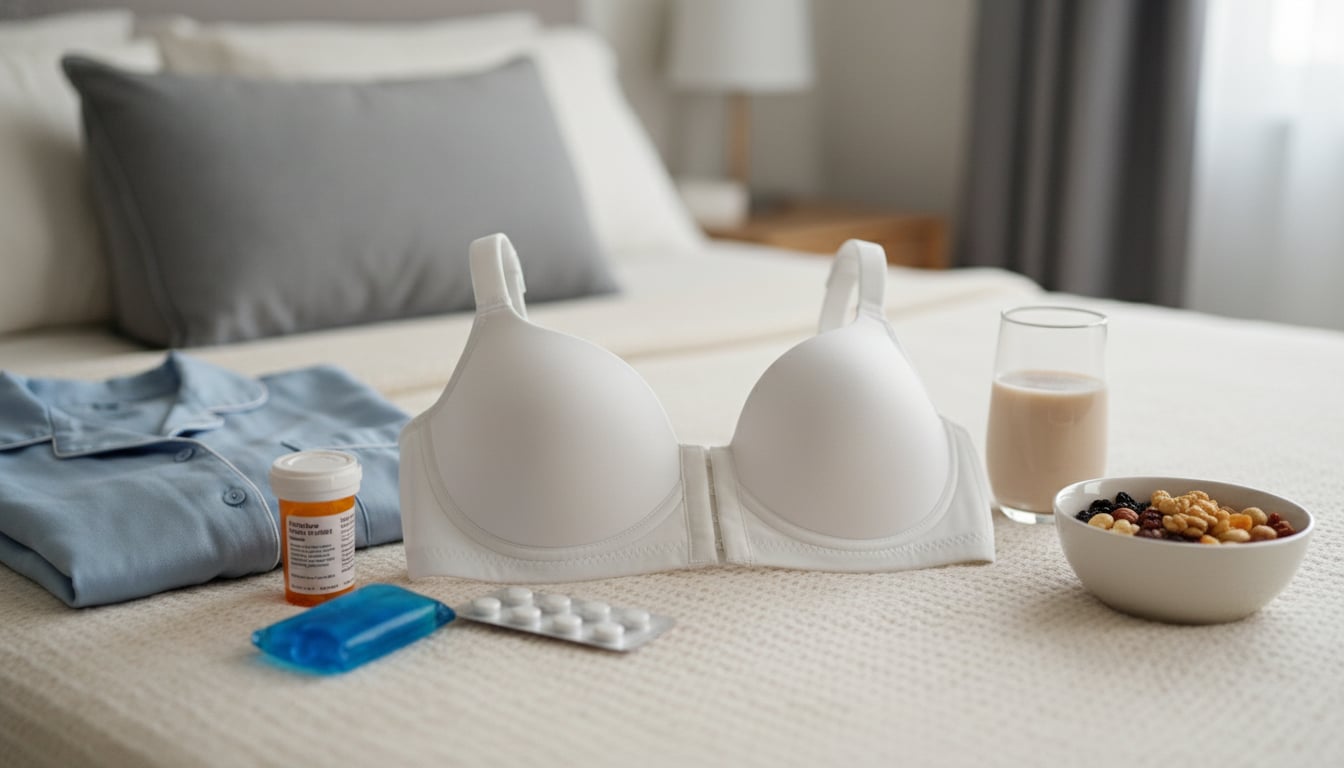
Breast Augmentation Recovery Must-Haves: The Complete Guide to Preparing for a Smooth Healing Process
TL;DR
The most important breast augmentation recovery must-haves include a front-closure surgical bra, prescribed pain medications, ice packs, a wedge pillow for elevated sleeping, front-opening clothing, stool softeners, and high-protein meal prep. Most acute discomfort passes within the first three to five days, and desk-job patients typically return to work within one to two weeks. Your surgeon’s specific instructions always override general advice, so treat this guide as a preparation starting point and discuss details during your pre-op consultation.
You’ve scheduled your breast augmentation in Denver or wherever you’re having surgery. The research is done, the consultation happened, the date is on the calendar. Now you’re staring at a blank shopping list wondering what you actually need at home for recovery.
This guide covers every breast augmentation recovery must-have, from the non-negotiable medical supplies to the comfort items that patients consistently say made the biggest difference. Each item includes a clear definition, why it matters, and when during recovery you’ll actually use it.
One important note before anything else: your surgeon’s instructions take priority over everything written here. Surgeons have different preferences on compression, medications, and activity restrictions based on your specific procedure, implant type, and placement. This guide gives you a head start so you can walk into your pre-op appointment with the right questions.
Essential Recovery Items
These are the non-negotiables. Every breast augmentation patient needs these items ready at home before surgery day.
Front-Closure Surgical Bra
A wire-free, front-closing bra that provides gentle support to stabilize implants and reduce swelling during the initial weeks after surgery. The front closure matters because you won’t be able to raise your arms overhead or reach behind your back comfortably for the first two weeks.
Most surgeons recommend wearing a cotton surgical bra for three to four weeks, then transitioning to a comfortable everyday bra while still avoiding underwire for another month or more. Buy at least two so you can alternate while washing.
If you’re considering different implant options and wondering how they affect recovery, pages on Motiva implants, Natrelle implants and Sientra breast implants explain the differences in implant technology that can influence your post-op experience.
Prescription Pain Medications
These typically include a mild opioid or non-opioid pain reliever, a muscle relaxer, and an antibiotic. Your surgeon will send prescriptions one to two weeks before surgery. Fill them immediately so they’re ready when you walk through the door after your procedure.
Acute pain typically subsides within one to five days post-op. Many patients transition to over-the-counter medications by day two or three. Some practices, Like Leela Mundra MD now offer opioid-free recovery plans for patients who prefer to avoid narcotics entirely.
Familiarize yourself with dosage instructions before surgery day. When you’re groggy from anesthesia is not the time to read fine print. Write out a simple medication schedule and tape it to your fridge.
Gauze and Wound Dressings
Sterile absorbent pads placed between incision sites and your surgical bra to absorb normal post-operative drainage. It’s completely normal for incisions to seep during the first week. Change your gauze at least once daily, or more often if needed.
A useful trick that several surgical practices mention: maxi pads work as a gauze substitute in a pinch. They’re absorbent, readily available, and the right general size.
For a more thorough approach to wound care, consider assembling a small kit that includes antibacterial soap, sterile gauze pads, hypoallergenic medical tape, saline wound wash, antibiotic ointment (if approved by your surgeon), soft washcloths, and sterile cotton swabs.
Elevated Sleeping Setup
A sleeping arrangement that keeps your upper body elevated at roughly 30 to 45 degrees. This reduces swelling, eases breathing, and prevents you from rolling onto your stomach during sleep. A wedge pillow is the most popular choice, though stacking regular pillows or sleeping in a recliner works too.
You won’t need to sleep sitting bolt upright, but you should sleep slightly propped up for the first two weeks. Side sleeping usually becomes comfortable around week two. Belly sleeping is typically off-limits for at least six weeks.
Body pillows placed on either side of you can act as guardrails to prevent unconscious rolling. This is one of those breast augmentation recovery must-haves that patients say they didn’t appreciate until they tried sleeping flat on night one and immediately regretted it.
Front-Opening Clothing
Loose, soft shirts that open from the front: button-downs, zip-up hoodies, or anything that doesn’t require pulling fabric over your head. You’ll avoid lifting your arms above your head for roughly two weeks after surgery, so overhead clothing simply isn’t an option.
Wear a front-closing shirt to the surgery center on procedure day. For the first week at home, zip-up sweatshirts and loose flannel button-downs will be your uniform.
Slip on shoes are also beneficial to reduce bending down to tie laces or pull on boots. Simple slip on slides, Birkenstocks or Crocs can help.
Scar Management Products
Medical-grade silicone gel or adhesive silicone sheets applied to healed incision lines to flatten, soften, and fade scars over time. These don’t come into play until roughly one week post-op, once your incisions have fully closed.
With proper care (including silicone sheets, scar creams, and sun protection), most breast augmentation scars become thin, faint lines within a year. The incision is typically hidden under the breast fold, making it barely visible even before it fully matures.
Your surgeon will likely provide specific scar gel recommendations at your first post-op appointment.
Highly Recommended Recovery Supplies
These items aren’t strictly medical necessities, but there’s strong consensus among both surgeons and patients that they make a significant difference in recovery quality.
High-Protein Nutrition and Meal Prep
Pre-prepared nutritious meals and high-protein snacks that support tissue repair without requiring you to cook during the first several recovery days. The body needs fuel to heal, and protein is the primary building block for tissue repair.
Your body continues healing internally for several months, even after you feel fine externally.
Batch-cook meals before surgery or set up a meal delivery service. The fatigue of recovery makes even simple cooking exhausting for the first three to four days. Stock easy, protein-rich snacks: Greek yogurt, string cheese, protein shakes, rotisserie chicken, hard-boiled eggs.
One more dietary note that often gets overlooked: avoid excess salt during recovery. Sodium contributes to fluid retention and can worsen swelling.
Stool Softener
An over-the-counter supplement (docusate sodium is the most common) that prevents constipation caused by opioid pain medications and post-operative inactivity. Anesthesia alone can slow your digestive system. Add prescription pain medications on top, and constipation becomes almost inevitable without preventive action.
Digital Thermometer
A basic tool to monitor your body temperature after surgery. A persistent fever can be an early sign of infection and warrants an immediate call to your surgeon’s office. Keep the thermometer on your nightstand and check your temperature at least once daily during the first week.
If your temperature stays elevated above 101°F, contact your surgical team right away. Early detection of infection makes treatment far simpler.
Comfort Items That Make a Real Difference
These aren’t medical necessities, but they meaningfully improve quality of life during a time when small comforts feel enormous.
Wet Wipes and Cleansing Wipes
Pre-moistened wipes for personal hygiene during the initial days when showering may be restricted. Most surgeons limit showering for 24 to 48 hours post-op (some longer), and even once you’re cleared, showering feels like a major production when your movement is limited. Wipes bridge the gap.
Heating Pad
An electric or microwavable pad placed on the lower back or neck to relieve muscle soreness caused by sleeping in an elevated position. Sleeping propped up for two weeks takes a toll on your back and neck. A heating pad provides real relief for that secondary soreness that has nothing to do with your chest.
Water Bottle with Straw
A refillable water bottle with a built-in straw or bendy straw. Staying hydrated accelerates healing, but sitting fully upright to drink from a regular glass is uncomfortable during the first few days. A straw bottle lets you sip while reclined without straining your chest muscles. It also helps you track daily intake, which matters more than usual when your body is recovering.
Entertainment and Distraction
Books, streaming queues, podcasts, puzzles, downloaded playlists. Low-effort activities to occupy recovery downtime. Pre-load everything before surgery. You’ll have days where you feel fine mentally but can’t do much physically, and boredom becomes its own kind of discomfort.
Lymphatic Drainage Massage
A specialized, gentle massage technique performed by a trained therapist to reduce fluid buildup and swelling after surgery. Some practices include lymphatic massage as part of their surgical recovery packages. It’s more commonly emphasized after procedures like liposuction or tummy tuck surgery, but certain surgeons recommend it after augmentation too. Ask your surgeon if it’s appropriate for your recovery plan.
Recovery Terms You Should Know
These aren’t items to buy. They’re concepts you’ll encounter during recovery that are worth understanding in advance.
Drop and Fluff
The natural process where breast implants gradually settle lower on the chest (“drop”) and the lower breast pole fills out (“fluff”) over weeks and months after surgery. Directly after the procedure, implants often ride high and look flatter or more square. As the chest muscles relax and tissues stretch, implants drop into a more natural position and the lower breast area rounds out.
The full process typically takes three to six months. This means what you see in the mirror at two weeks is not your final result. Patience during this phase is its own kind of must-have.
Capsular Contracture
A complication where the natural scar tissue capsule that forms around a breast implant tightens excessively. This can cause firmness, discomfort, or changes in breast shape. It’s one of the most discussed long-term risks of breast augmentation. Evidence on whether breast massage or implant displacement exercises prevent capsular contracture is mixed, and surgeons have varying protocols.
If capsular contracture does develop, revision breast augmentation can address it. Knowing the term and what to watch for helps you communicate effectively with your surgeon during follow-up visits.
Subpectoral vs. Subglandular Placement
The two main positions for breast implant placement. Subpectoral (also called submuscular) means under the pectoral muscle. Subglandular means over the muscle but under the breast gland. Placement affects recovery intensity: implants placed under the muscle often involve more initial soreness and a slightly longer recovery period than over-the-muscle placement.
Your surgeon will recommend placement based on your anatomy, implant size, and goals. Understanding this distinction helps you calibrate your recovery expectations.
Compression Bra vs. Support Bra vs. Surgical Bra
These terms get used interchangeably in patient conversations, but there are differences. A surgical bra is typically provided immediately post-op. A compression bra applies firm, even pressure to control swelling. A support bra provides hold without aggressive compression. The common thread: no underwire and front closure.
Which type your surgeon prefers depends on their approach and your specific procedure. Some surgeons want firm compression for weeks. Others want minimal compression from day one. This is one of the most variable instructions in breast augmentation recovery, so follow your surgeon’s guidance precisely.
Incision Care
The daily routine of keeping surgical incision sites clean and dry to prevent infection and promote optimal scar healing. This usually involves gentle washing with antibacterial soap, careful drying, applying any prescribed ointments, and covering with fresh gauze. Keeping incisions out of direct sunlight is also important during the first several months, as UV exposure can darken scars.
Patients getting a breast augmentation with lift will have additional incision lines and should expect a somewhat more involved incision care routine.
Your Recovery Timeline: When Each Must-Have Matters Most
This is the section most recovery guides skip entirely. Knowing what to buy is helpful. Knowing when you’ll actually use each item is more helpful.
Days 0 to 3: Acute Recovery
This is the most intense phase. Expect the most discomfort, tightness, and pressure. Swelling typically peaks around days three to four.
Items in play: Prescription pain medications, ice packs (20 minutes on, 20 minutes off), surgical bra (usually placed by your surgeon before you leave), gauze for drainage, water bottle with straw, front-opening clothing, wedge pillow, stool softener.
You’ll spend most of this time resting, sleeping in an elevated position, and staying on top of your medication schedule. Have someone with you for at least the first 24 to 48 hours.
Days 4 to 7: Early Recovery
Pain decreases noticeably. Many patients begin transitioning to over-the-counter pain relievers. Swelling is still present but manageable.
Items in play: Everything from above, plus wet wipes (especially if showering is still limited), entertainment, meal prep or delivery. This is when boredom becomes a factor and having pre-loaded entertainment pays off.
Weeks 2 to 4: Active Recovery
Scar management products enter the picture once incisions have fully closed. Back and neck soreness from elevated sleeping becomes noticeable.
Items in play: Scar gel or silicone sheets, alternate support bras, breast moisturizer, heating pad for back soreness. Side sleeping usually becomes comfortable around week two. Most desk-job patients return to work within one to two weeks.
Patients combining breast augmentation with other procedures (as part of a mommy makeover, for example) may need additional recovery time during this phase.
Weeks 4 to 6: Return to Normal
Light exercise may resume with surgeon approval. The surgical bra transitions to regular supportive bras (still no underwire for most patients). Belly sleeping typically gets the green light around six weeks.
Months 3 to 6: Final Settling
Drop and fluff completes. Implants reach their final position. This is when your results truly take shape and when final bra shopping makes sense. Scars continue to mature and fade throughout this period and beyond.
Real Patient Tips That Surgeons Don’t Always Mention
Clinical checklists cover the medical essentials, but patients who’ve been through recovery share practical wisdom that doesn’t always make it onto official lists. These are among the most frequently cited breast augmentation recovery must-haves from real patient communities.
Rearrange your home before surgery. Move everyday items (plates, cups, snacks, medications, chargers) to counter height or lower shelves.
Buy slide-on shoes. Bending to tie laces or zip boots is off the table for weeks. Slip-on sneakers, slides, or Crocs are the move.
Plan for pets and kids. You can’t lift children, and you shouldn’t be wrangling an excited dog. Arrange help for at least the first week, longer if you have toddlers or large pets.
Start stool softeners early. Don’t wait until constipation becomes a problem. The combination of anesthesia, inactivity, and pain medication makes this nearly universal.
Queue entertainment before surgery. Download shows, charge your tablet, stack books on your nightstand. You won’t want to do this while recovering, and having nothing to do makes time crawl.
Set up a recovery station. Create one spot (your bed or a recliner) with everything you need within arm’s reach: medications, water, phone, charger, remote, snacks, lip balm, tissues. Minimize reasons to get up during the first three days.
Preparing for Your Best Recovery
The difference between a stressful recovery and a smooth one often comes down to preparation. Having the right breast augmentation recovery must-haves in place before surgery day eliminates the scramble of trying to problem-solve while you’re groggy, sore, and restricted in movement.
Every patient’s recovery is slightly different. Implant type, placement (above or below the muscle), whether you’re combining procedures like a breast lift with your augmentation, your overall health, and your surgeon’s specific protocols all influence what your recovery looks like and what you’ll need most.
The best way to build a personalized recovery plan is during your pre-op consultation. A thorough consultation covers not just surgical goals and implant selection, but recovery logistics, medication planning, and what to expect week by week. If you’re considering breast augmentation and want that level of detailed preparation, you can learn what to expect at a consultation or contact our Denver office to schedule an appointment with Dr. Leela Mundra.
Frequently Asked Questions
What are the most important breast augmentation recovery must-haves I should buy first?
Start with a front-closure surgical bra (your surgeon may provide one), prescription medications (filled before surgery day), ice packs, gauze, a wedge pillow, front-opening clothing, and stool softeners. These cover the acute recovery phase when comfort and pain management matter most. Add comfort and scar care items in the days that follow.
How long does breast augmentation recovery take?
Most patients experience the worst discomfort during days one through three. Swelling peaks around days three to four. Many desk-job patients return to work within one to two weeks. Physical jobs may require two to four weeks off, sometimes up to six. The full drop-and-fluff settling process takes three to six months, though you’ll feel functionally normal long before that.
When can I sleep on my stomach after breast augmentation?
Most surgeons recommend avoiding belly sleeping for at least six weeks after surgery. Side sleeping usually becomes comfortable around week two. Sleeping elevated at 30 to 45 degrees is standard for the first two weeks to control swelling.
What should I eat during breast augmentation recovery?
Focus on protein-rich foods. Good options include Greek yogurt, eggs, lean meats, protein shakes, and beans. Vitamins A, C, and zinc also support wound healing. Avoid excess salt, which worsens swelling. Pre-cook meals or arrange delivery so you’re not standing at a stove during the first week.
What’s the difference between a surgical bra and a compression bra?
A surgical bra is typically placed on you immediately after surgery by your surgical team. A compression bra applies firmer, more even pressure to control swelling. A support bra provides hold without aggressive compression. The key features they share: no underwire and front closure. Different surgeons have strong preferences about which type and how much compression, so always follow your surgeon’s specific instructions.
Does implant placement affect what I need for recovery?
Yes. Submuscular (under the muscle) placement generally involves more initial soreness and tightness compared to subglandular (over the muscle) placement. The fundamental recovery must-haves remain the same for both, but the intensity of the first week can differ.