
Upper Eyelid Surgery Name: Blepharoplasty Explained (2026)
TL;DR
The medical name for upper eyelid surgery is upper blepharoplasty (pronounced BLEF-uh-roe-plas-tee). It removes excess skin, and sometimes fat or muscle, from the upper eyelid to create a more open, rested appearance or to improve blocked peripheral vision. It is the most common facial cosmetic surgery worldwide, with a 95% patient satisfaction rate.
The question comes up constantly: what is the actual name for that surgery that fixes heavy, drooping upper eyelids? Maybe you overheard it at a dinner party, saw a celebrity’s recovery video on Instagram, or your eye doctor mentioned you might benefit from it. Whatever brought you here, the answer is straightforward.
The medical name for upper eyelid surgery is upper blepharoplasty.
That single term covers both cosmetic and functional versions of the procedure. The word comes from Greek: blepharon (eyelid) and plassein (to form or mold). So blepharoplasty literally means “reshaping the eyelid.”
You will also hear it called by several other names. Eyelid lift, upper eyelid lift, hooded eye surgery, and the informal shorthand “upper bleph” (used widely on Reddit and Instagram) all refer to the same operation. Knowing the correct terminology matters because it helps you research surgeons, understand insurance paperwork, and communicate clearly during consultations.
Learn more about upper blepharoplasty and what it involves.
What Does Upper Blepharoplasty Actually Do?
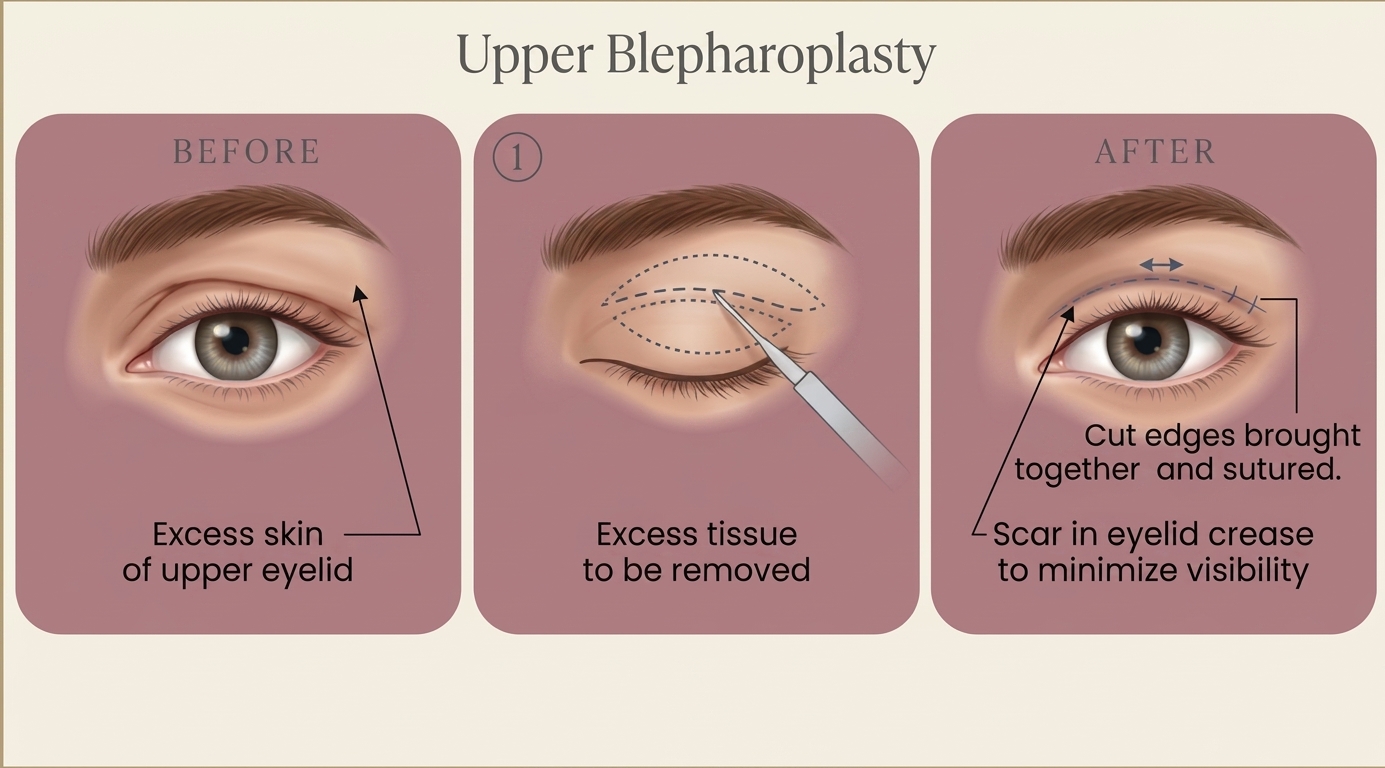
The condition it treats is called dermatochalasis, a medical term for the age-related laxity and redundancy of upper eyelid skin. Dermatochalasis often causes that characteristic “hooded” look and has a reported prevalence of up to 17.8% in adults. The eyelid margin itself sits in a normal position; the problem is simply too much skin draping over it.
The procedure is outpatient, typically takes one to two hours, and is commonly performed under local anesthesia. It falls under the broader category of eyelid surgery, which includes procedures for both upper and lower lids.
Upper Blepharoplasty vs. Related Procedures
The upper eyelid surgery name gets confused with several other procedures. Understanding the differences prevents misdiagnosis and, more importantly, prevents dissatisfaction with results. In fact, research indicates that one of the most common sources of dissatisfaction after blepharoplasty is the failure to address ptosis that was not caused by heavy eyelid skin.
Here is how the procedures compare:
Comparison Table
Procedure | What It Addresses | Key Difference |
|---|---|---|
Upper Blepharoplasty | Excess skin on the upper eyelid (dermatochalasis) | Removes skin; the eyelid muscle works normally |
Sagging eyebrows that push skin onto the upper eyelid | Elevates the brow position; does not remove eyelid skin directly | |
Under-eye bags, puffiness, or wrinkled skin below the eye | Addresses the lower lid, not the upper |
Why This Matters
Similarly, what looks like heavy upper eyelids might actually be caused by a drooping brow. In those cases, a brow lift, sometimes performed together with upper blepharoplasty, is the correct solution. An experienced surgeon will evaluate all three possibilities during a consultation and explain which procedure (or combination) fits your anatomy.
For mild cases where surgery feels premature, some patients explore non-surgical options like BOTOX to subtly lift the brow. These are temporary solutions, but they can offer a preview of how a lifted brow might improve the upper eyelid area.
Who Is a Good Candidate for Upper Blepharoplasty?
Good candidates generally share a few characteristics:
Visible excess skin on the upper eyelids that creates a hooded appearance or makes the eyes look tired
Visual obstruction from drooping lids, confirmed by a doctor’s exam or visual field testing
A desire for a more alert, rested look without changing the fundamental shape or character of the eyes
Good general health and realistic expectations about what the surgery can accomplish
No undiagnosed ptosis or significant brow descent that would need to be addressed separately or in combination
The single most important step before surgery is getting the correct diagnosis. Is your issue dermatochalasis (excess skin), ptosis (muscle weakness), brow descent, or some combination of all three? The answer determines everything: which procedure you need, whether insurance might cover it, and what your results will look like.
Find out what to expect at a consultation and how a thorough exam helps answer these questions.
Quick Facts: Recovery, Cost, and Results
Recovery timeline. Most people can resume work and normal activities within 10 to 14 days. Stitches from the upper eyelid incision are typically removed around day five. Full healing takes two to four weeks, though residual swelling may continue to improve beyond that.
Popularity. The upper eyelid surgery name you now know, blepharoplasty, describes the most common surgical cosmetic procedure worldwide as of 2024. According to the ISAPS Global Survey, more than 2.1 million blepharoplasty procedures were performed globally that year, a 13.4% increase that pushed it past liposuction for the first time. In the United States alone, ASPS member surgeons performed 120,755 eyelid surgeries.
Satisfaction. According to 2025-2026 RealSelf member reviews, the “worth it” rating for blepharoplasty is 95%, one of the highest among all facial procedures.
Modern techniques. The trend in upper blepharoplasty has shifted toward more conservative approaches, particularly when it comes to the fat compartment. Rather than aggressively removing fat (which can create a hollow, aged look over time), many surgeons now focus on preservation and, in some cases, augmentation techniques to achieve a naturally rejuvenated appearance.
Questions to Ask Your Surgeon
Walking into a consultation armed with the right questions makes a real difference. Here are the ones that matter most:
Will I need a brow lift in addition to upper blepharoplasty? If brow descent is contributing to the hooded look, blepharoplasty alone may not solve the problem.
What is your approach to preserving a natural appearance? You want a surgeon who removes enough skin to make a visible difference without creating a hollow or surprised look.
Can I see before-and-after photos of patients with similar anatomy? Results vary significantly depending on starting anatomy, so seeing comparable cases is more useful than generic photos.
What are the risks specific to my situation? Every surgery carries risks. A straightforward discussion about complications like asymmetry, dry eyes, or difficulty closing the eyes builds trust and sets realistic expectations.
The right surgeon will spend time answering these questions thoroughly. Plastic surgeons with fellowship training in aesthetic surgery, like Dr. Leela Mundra, prioritize education-first consultations where goals, risks, and alternatives are all reviewed before any decisions are made.
Frequently Asked Questions
What is the official medical name for upper eyelid surgery?
The medical name is upper blepharoplasty. It is also called an eyelid lift, upper eyelid lift, or “upper bleph” in informal settings. The term comes from the Greek words blepharon (eyelid) and plassein (to form).
Is upper blepharoplasty the same as ptosis surgery?
No. Upper blepharoplasty removes excess skin from the eyelid. Ptosis surgery repairs or tightens the levator muscle that lifts the eyelid. They address different problems and are performed using different techniques, though they can be combined when both issues are present.
How long does recovery take after upper blepharoplasty?
Most patients return to work and normal activities within 10 to 14 days. Sutures are usually removed around day five. Full healing, including resolution of residual swelling, takes two to four weeks.
How much does upper blepharoplasty cost?
The average surgeon’s fee is approximately $3,359 according to ASPS data. Total costs including anesthesia and facility fees typically range from $4,000 to $6,000. Costs vary by surgeon, geographic location, and case complexity.
What is the difference between upper blepharoplasty and a brow lift?
Upper blepharoplasty removes excess skin from the eyelid itself. A brow lift elevates the position of the eyebrow, which can indirectly reduce hooding by pulling skin upward and away from the lid. Some patients need both procedures for optimal results.
How popular is upper blepharoplasty?
It is the most popular facial cosmetic surgery in the world. In 2024, over 2.1 million blepharoplasty procedures were performed globally, and it carries a 95% patient satisfaction rate based on RealSelf reviews.
Can I get upper and lower blepharoplasty at the same time?
Yes. Many surgeons perform upper and lower blepharoplasty together in a single session. Combined procedures address both hooded upper lids and under-eye bags.
Ready to find out whether upper blepharoplasty is right for you? Contact our Denver office to schedule a consultation and get personalized answers about your anatomy, candidacy, and options.