
Motiva vs Gummy Bear Implants: 2026 Comparison Guide
TL;DR
Motiva and gummy bear implants both use cohesive silicone gel, but they behave very differently. Gummy bear implants are firm and form-stable, holding a fixed shape in any position. Motiva Ergonomix uses a softer, adaptive gel that shifts with gravity, mimicking natural breast tissue movement. The right choice depends on your anatomy, lifestyle, and aesthetic goals, which is why a consultation with a plastic surgeon matters more than picking a brand online.
If you’re researching breast implants, you’ve probably stumbled into a confusing comparison. “Motiva vs. silicone” or “Motiva vs. gummy bear” shows up everywhere, but the framing itself is misleading. Motiva implants ARE silicone implants. The actual comparison worth making is between Motiva’s newer gel technology and the traditional highly cohesive silicone implants commonly called “gummy bear” implants. It’s about how the silicone gel behaves inside the shell, how it moves, and how it feels under real-world conditions.
This guide breaks down both options with clear definitions, a side-by-side comparison, and practical guidance on who each implant suits best.
What Is a Gummy Bear Implant?
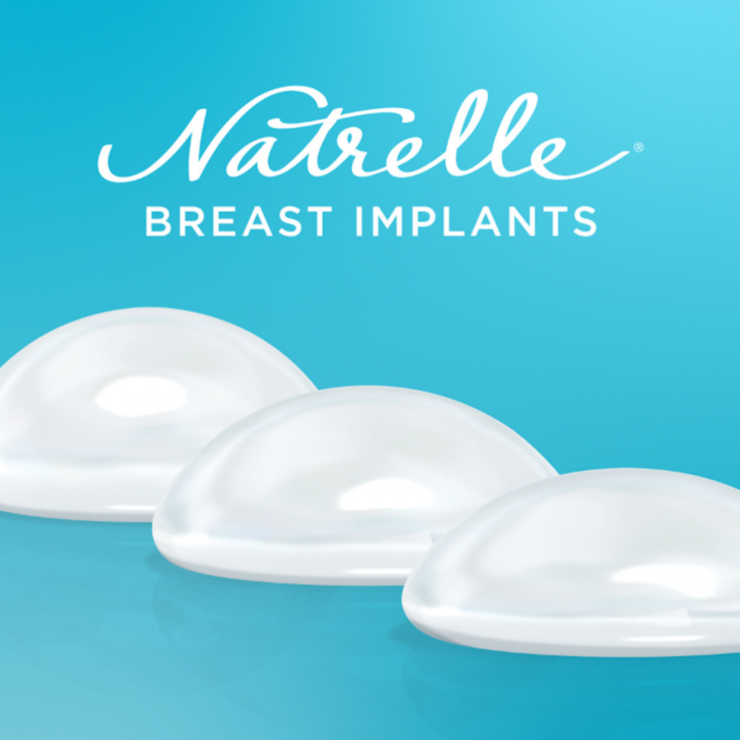
“Gummy bear” is not a brand name. It’s a nickname given to highly cohesive, form-stable silicone gel implants because when you cut one in half, it holds its shape, just like gummy bear candy. The medical term is “cohesive silicone gel breast implant.”
These are considered fifth-generation silicone implants. They emerged in the 2000s and represented a major improvement over earlier silicone designs, offering lower rupture rates and more predictable results. The three traditional manufacturers of gummy bear implants are Allergan (which makes Natrelle breast implants), Mentor, and Sientra.
Key characteristics of gummy bear implants:
Firm, dense gel that maintains its shape regardless of body position
The gel does not flow or shift inside the shell
Provides strong upper-pole fullness and structural projection
The form-stability is a feature, not a flaw. For certain body types and goals, that built-in structural support is exactly what’s needed.
What Is a Motiva Implant?
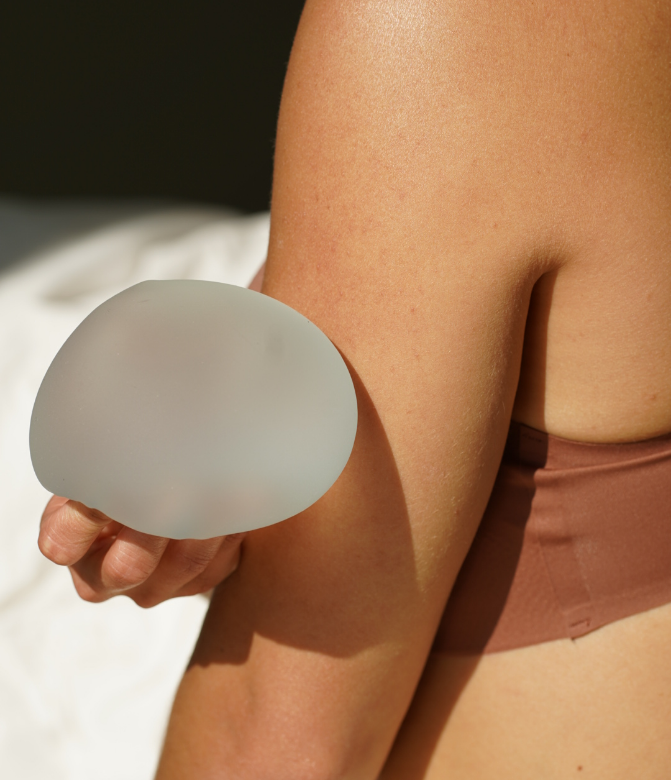
Motiva is a brand made by Establishment Labs. It has been available internationally for over 14 years and has been used in more than 85 countries with nearly four million devices delivered. In the United States, Motiva is a much newer option. The FDA approved two Motiva models, the SmoothSilk Ergonomix and SmoothSilk Round, in late September 2024. It was the first new breast implant to receive premarket approval (PMA) since 2013.
That approval was supported by an open-label, prospective study of 560 patients followed for up to three years across more than 20 U.S. and European sites. Since becoming commercially available for breast augmentation in the U.S., more than 60,000 Motiva implants have been sold domestically.
The key distinction of Motiva implants are its gel behavior:
Motiva Ergonomix adapts its shape to gravity. Standing upright, it settles into a teardrop silhouette. Lying down, it rounds out. This is why Establishment Labs describes it as the first implant to embody the science of ergonomics.
Motiva Round is a softer round implant with the same SmoothSilk surface technology.
The SmoothSilk surface is engineered to minimize inflammation at the implant-tissue interface, designed to reduce the risk of capsular contracture.
Side-by-Side Comparison: Motiva vs Gummy Bear
Feature | Motiva (Ergonomix) | Gummy Bear (Traditional) |
|---|---|---|
Gel type | Cohesive silicone, softer formulation | Highly cohesive, form-stable silicone |
Shape behavior | Adaptive: teardrop upright, round supine | Fixed: holds shape in all positions |
Softness | Softer at rest, closer to natural tissue feel | Firmer by design |
Shell surface | SmoothSilk (nano-textured) | Varies: smooth, textured, or micro-textured depending on brand |
FDA approval | September 2024 (U.S.) | Various dates (2006-2013 depending on brand) |
Typical incision | Often smaller due to gel flexibility | Standard; may require slightly larger incision for firmer gel |
Brands | Establishment Labs (Motiva) | Allergan, Mentor, Sientra |
Best for | Natural movement, active lifestyles, softer feel | Structural fullness, stable projection, looser skin |
Long-term data | Extensive international data; U.S. data accumulating | 15-20+ years of U.S. clinical data |
Both implant types use cohesive silicone gel at their core. The difference lies in the density of cross-linking, the gel formulation, and how volumetric distribution is engineered. These manufacturing differences produce entirely different physical behaviors in the body.
For a deeper look at Motiva’s sizing and profiles, the available options may affect which model a surgeon recommends for your frame.
Feel and Movement: The Core Difference
This is where the Motiva vs gummy bear comparison gets most personal. Feel and movement are what patients notice every day, not specs on a chart.
Motiva Ergonomix is engineered for dynamic softness. Many patients and surgeons describe the feel as closer to natural breast tissue during everyday activities. The gel responds to gravity and body position, so the implant moves with you rather than maintaining a static shape.
Gummy bear implants feel firmer. That firmness is intentional. The highly cross-linked gel provides structural support and consistent projection. But some patients find the trade-off is less natural movement, particularly during physical activity or position changes.
Neither approach is objectively better. The best implant is the one that matches your anatomy.
Surgeons consistently emphasize that pocket placement (subfascial versus submuscular) matters just as much as the implant itself. Active patients often benefit from subfascial placement with Motiva to avoid animation distortion, where the implant shifts visibly during chest muscle flexion. But pocket choice is a surgical decision, not something to decide from a blog post.
Safety and Technology
Motiva’s Safety Profile
Motiva’s SmoothSilk surface technology was designed specifically to reduce capsular contracture, one of the most common complications in breast augmentation. Complication rates in the FDA clinical trial were reported to be lower than those seen with any other implant in a U.S. PMA study.
The 560-patient study across 20+ sites provided the data that supported approval. Internationally, Motiva’s track record spans 14 years and millions of devices. That said, U.S.-specific long-term data beyond three years is still accumulating.
Gummy Bear Safety Profile
Traditional gummy bear implants have a longer domestic track record. The highly cohesive gel was a direct safety improvement: if the shell is compromised, the gel holds its shape instead of migrating. This “form-stable” characteristic was a significant advancement when these implants first appeared.
One safety consideration specific to anatomical (teardrop) gummy bear implants is rotation risk. Because the shape is asymmetric, if the implant rotates inside the pocket, it can create a visible distortion that may require revision surgery. Motiva Ergonomix sidesteps this problem entirely because its base is round while its shape adapts through gel behavior, not shell geometry.
Both implant types are compatible with mammography. Both require long-term monitoring with periodic imaging (MRI or ultrasound) per FDA guidelines. Neither is a lifetime device; all breast implants may eventually need replacement or removal.
For patients exploring Motiva’s safety data and risks in more detail, that guide covers the clinical trial findings.
Who Is Each Implant Best For?
Rather than declaring a winner in the Motiva vs gummy bear comparison, the more useful framework is matching implant characteristics to patient profiles.
Motiva Ergonomix tends to suit:
Active patients (runners, CrossFit, yoga) who want natural movement during exercise
Women who prioritize a soft, natural feel over maximum projection
Patients seeking a “follows-you” look that changes subtly with body position
Women after pregnancy who want a soft, natural restoration, sometimes combined with a breast augmentation with lift
Gummy bear implants tend to suit:
Patients who want reliable upper-pole fullness that stays consistent in any position
Women with looser skin who benefit from the implant’s built-in scaffold effect
Patients who prefer a more projected, structured look
The single most important variable in your result is your surgeon’s expertise and judgment. An experienced surgeon will assess your tissue thickness, chest wall shape, skin elasticity, and lifestyle to recommend the right implant and the right pocket.
If you’re considering switching from an older implant to either option, implant exchange is a well-established procedure.
Choosing the Right Implant Starts With a Consultation
Reading comparison guides is a smart first step. But the Motiva vs gummy bear decision ultimately depends on your body, not a blog post. Tissue thickness, chest wall anatomy, skin elasticity, breast shape goals, and activity level all factor into the recommendation.
A thorough consultation should include a physical examination, a discussion of your goals and lifestyle, a clear explanation of risks and alternatives, and honest guidance on which implant category fits your anatomy. That’s the kind of personalized assessment that turns research into a plan.
Schedule a consultation with Dr. Mundra to discuss which implant option is right for your goals.
Frequently Asked Questions
Are Motiva implants the same as gummy bear implants?
Not exactly. Motiva uses cohesive silicone gel, so technically it falls under the broad umbrella of cohesive gel implants. But when most people say “gummy bear,” they mean the older, firmer, form-stable implants made by Allergan, Mentor, or Sientra. Motiva’s gel is engineered to be softer and more adaptive, which produces a noticeably different feel and movement pattern.
Do Motiva implants last longer than gummy bear implants?
No breast implant is a lifetime device, regardless of type. Both Motiva and gummy bear implants may eventually need replacement or removal. The FDA recommends periodic imaging to monitor all silicone implants. Motiva has extensive international data but only a few years of U.S. clinical follow-up so far, so direct longevity comparisons with gummy bear implants (which have 15-20+ years of U.S. data) aren’t possible yet.
Which feels more natural, Motiva or gummy bear?
Most surgeons and patients describe Motiva Ergonomix as feeling softer and more similar to natural breast tissue. Gummy bear implants feel firmer by design. “Natural” is subjective, though. Some patients prefer the structured fullness that gummy bear implants provide, and for them, that aesthetic feels right. The best way to compare is to handle both implant types during your consultation.
Can I switch from gummy bear implants to Motiva?
Yes. Revision breast augmentation and implant exchange procedures are common. Patients switch implant types for many reasons: wanting a softer feel, addressing complications, or simply preferring newer technology. Your surgeon will evaluate your existing capsule, tissue condition, and goals to plan the exchange.
Is one implant safer than the other?
Both are FDA-approved and considered safe. Motiva’s clinical trial reported lower complication rates than prior PMA studies, and its SmoothSilk surface was designed to reduce capsular contracture risk. Gummy bear implants have a longer domestic track record with well-documented safety profiles. The most important safety factor is choosing a plastic surgeon with experience in the implant type you select.
Does pocket placement matter as much as implant choice?
Absolutely. Surgeons who write about Motiva vs gummy bear comparisons consistently emphasize that whether the implant goes above the muscle, below the muscle, or in a subfascial plane affects the final look and feel just as much as the implant itself. For more detail on over-the-muscle placement with Motiva, that guide covers the pros and cons.
How do I prepare for a consultation about implant options?
Come with your questions written down. Think about your goals (natural movement vs. maximum fullness), your lifestyle (how active you are), and any concerns about recovery or long-term maintenance. Learn what to expect at your consultation so you can make the most of your time with the surgeon.