
SMAS Facelift Results 2026: Before & After, Longevity

TL;DR: An SMAS facelift targets the deeper structural layer of the face to produce lasting improvements in jawline definition, jowl reduction, and neck contour. Research across more than 6,000 patients shows satisfaction rates above 85%, with results typically lasting 7 to 12 years. Recovery follows a predictable timeline, with most patients looking “photo-ready” around day 30.
Before the 1970s, facelifts only tightened skin. Results faded quickly, and patients often ended up with that tight, windswept look that nobody wanted. The discovery of the SMAS layer changed everything about how surgeons approach facial rejuvenation, and understanding this layer is the key to understanding what kind of results you can actually expect.
Explore face and neck lift options to see how this approach translates to real patient care.
What Is an SMAS Facelift?
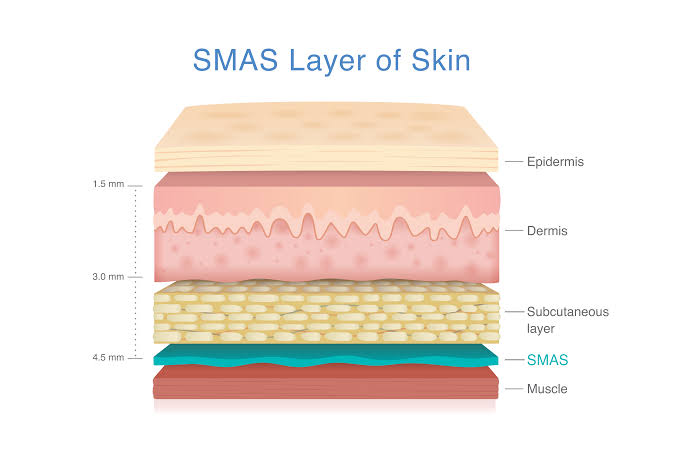
SMAS stands for Superficial Musculoaponeurotic System. It is a strong, fibrous layer of tissue that sits beneath the skin and fat of the face, connecting the deeper facial muscles to the overlying skin. Think of it as the structural scaffolding that holds your face in position. When you smile or frown, the SMAS is what transmits those muscle movements to the surface.
The SMAS was first described by Mitz and Peyronie in 1976, though Swedish plastic surgeon Tord Skoog had already begun developing techniques to manipulate this deeper layer in the early 1970s. Before this breakthrough, facelifts were purely skin-based operations. Surgeons would pull the skin tighter, suture it in place, and hope for the best. The problem was obvious: skin stretches. Without addressing the underlying structure, those results were short-lived and often looked artificial.
An SMAS facelift works by tightening, repositioning, or removing portions of this deeper layer. Because the SMAS provides the actual structural support for the face, manipulating it produces more natural and longer-lasting results than skin-only procedures ever could.
This distinction matters for anyone researching SMAS facelift results because the quality of your outcome depends largely on what happens at this deeper tissue level, not just what happens to the skin.
What Results Does an SMAS Facelift Produce?
SMAS facelifts are primarily a lower face and neck procedure. The areas that respond best include:
Jawline definition. Sagging along the jaw is tightened and sharpened, restoring a cleaner profile.
Jowl reduction. The pouches of tissue that droop below the jawline are lifted back into proper position.
Neck contour. Loose skin and banding in the neck are smoothed, creating a more defined angle between the jaw and neck.
Nasolabial folds. The deep creases running from nose to mouth are softened, though not eliminated entirely.
A 2025 meta-analysis published in Aesthetic Plastic Surgery found that SMAS facelift patients reported a satisfaction rate of 87.8%. A separate systematic review of 27 studies covering 6,086 patients found that over 85% were satisfied with their surgical outcomes.
Those are strong numbers. But honesty about limitations matters just as much as highlighting strengths.
What an SMAS Facelift Does Not Do Well
The SMAS facelift is not the best tool for midface rejuvenation. It provides excellent lifting of the lower face and neck, but it has limited ability to address sagging cheeks or the area around the eyes. Patients whose primary concerns involve the midface, such as flat cheekbones or significant under-eye hollowing, may need a different approach or complementary procedures like facial fat grafting to restore volume in those areas.
The “natural vs. overdone” question comes down to surgeon skill and judgment far more than the name of the technique. Technique matters, but execution matters more.
How Long Do SMAS Facelift Results Last?
This is the question everyone asks, and the honest answer is that longevity varies. The most reliable data clusters around 10 to 12 years for a well-executed SMAS facelift.
Why the wide range? Several factors come into play:
The specific sub-technique used. Imbrication and SMASectomy tend to produce longer-lasting results than plication (more on this below).
Skin quality at the time of surgery. Patients with better baseline elasticity tend to hold results longer.
Sun exposure. UV damage accelerates aging of both skin and deeper tissues. Colorado’s high altitude means stronger UV exposure, something worth taking seriously.
Smoking status. Smoking damages collagen and impairs blood flow, both of which shorten the lifespan of facelift results.
Genetics. Some people simply age faster than others, regardless of what they do.
The best way to frame SMAS facelift results is as a “reset of the clock.” Aging continues after surgery, but it continues from a younger starting point.
SMAS Facelift Recovery Timeline: When You’ll Actually See Results
Recovery is one of the biggest concerns for anyone considering this procedure, and for good reason. Understanding the week-by-week progression helps set realistic expectations.
Week 1: The Hardest Part
Days three through five typically represent the peak of swelling and discomfort. Your face will look significantly swollen and bruised, and this is completely normal. By the end of week one, swelling and bruising should have started to subside noticeably, and most sutures are removed.
Week 2: Turning the Corner
By the end of week two, many patients feel like themselves again and are ready to return to work and light activities like walking. You won’t look “done” yet, but you’ll look presentable enough for most social situations if needed.
Weeks 3 to 4: Real Improvements Emerge
Some residual swelling and tightness remain, but this is when patients typically start seeing genuine improvements in facial contour. The jawline begins to sharpen. The neck smooths out. The overall shape of the face starts to reflect the final result.
Day 30: The Photo-Ready Milestone
Most patients reach what surgeons call the “photo-ready” point around day 30, when 80 to 90 percent of swelling has resolved. This is when most people feel comfortable being photographed and attending social events without concern.
Months 3 to 12: Final Refinement
Complete healing takes approximately six months, with residual swelling gradually subsiding and incision lines continuing to fade. Some patients notice subtle changes even up to 12 months post-operatively.
If you are curious about how the consultation and pre-operative process works, understanding what to expect at a consultation can help you feel prepared.
Who Gets the Best SMAS Facelift Results?
Research indicates that the average age at the time of a primary facelift is approximately 50.2 years, with a range from about 35 to 70. But age alone does not determine candidacy. The patients who tend to get the best SMAS facelift results share several characteristics:
Moderate facial aging, primarily in the lower face and neck. Jowls, a softened jawline, and early neck laxity are the sweet spot for this procedure.
Good skin elasticity. Skin that still has some “snap-back” responds better to the SMAS repositioning underneath it.
Non-smoker status. Smoking is the single biggest modifiable risk factor for poor healing and shortened longevity of results.
Realistic expectations. A facelift takes years off, but it does not transform you into a different person or stop aging entirely.
Overall good health. Standard surgical fitness applies, including controlled blood pressure, no unmanaged diabetes, and the ability to tolerate general anesthesia safely.
Younger patients tackling early signs of aging, particularly developing jowls, often find that a SMAS facelift suits their needs perfectly without requiring the more extensive dissection of a deep plane procedure.
Commonly Combined Procedures
SMAS facelifts are frequently performed alongside other procedures to achieve a more comprehensive result. Data from large case series show the most common additions include:
Upper blepharoplasty (eyelid surgery), the single most common add-on
Fat grafting to restore volume lost with aging
Lower blepharoplasty for under-eye bags
Brow lift surgery to address forehead drooping and brow ptosis
Neck lift for patients with more significant neck concerns
Laser resurfacing to improve skin texture and quality
Combining procedures adds to both cost and recovery time but can produce a more harmonious overall rejuvenation.
Questions to Ask Your Surgeon About SMAS Facelift Results
The right questions during a consultation reveal both the surgeon’s expertise and how well they will communicate with you throughout the process.
What results can I realistically expect for my face? Every face ages differently. Cookie-cutter answers suggest a one-size-fits-all approach.
How do you address the midface? If midface concerns are part of your goals, this question reveals whether the surgeon will recommend complementary techniques or suggest you might be better served by a different approach.
Schedule a consultation to discuss your specific goals and find out which approach matches your anatomy and expectations.
Frequently Asked Questions
How long does it take to see final SMAS facelift results?
Most patients reach the “photo-ready” milestone around day 30, when 80 to 90 percent of swelling has resolved. However, complete healing takes approximately six months, with residual swelling gradually subsiding and incision lines continuing to fade through the first year.
Are SMAS facelift results permanent?
No facelift stops aging permanently. SMAS facelift results last several years, depending on the technique used, your skin quality, lifestyle habits, and genetics. You will continue to age after the procedure, but from a younger-looking baseline.
Will I look “pulled” or unnatural after an SMAS facelift?
The “pulled” look was a hallmark of older, skin-only facelifts. Because SMAS techniques reposition deeper structures rather than simply pulling skin tighter, the results tend to look natural and refreshed rather than stretched. The key variable is your surgeon’s judgment and skill.
What procedures are most commonly combined with an SMAS facelift?
The most frequent additions are upper eyelid surgery (blepharoplasty), fat grafting to restore facial volume, lower eyelid surgery, brow lift, neck lift, and laser resurfacing. Combining procedures can achieve a more complete rejuvenation while consolidating into a single recovery period.