
Motiva Breast Implants MRI Safety: 2026 Patient Glossary
TL;DR
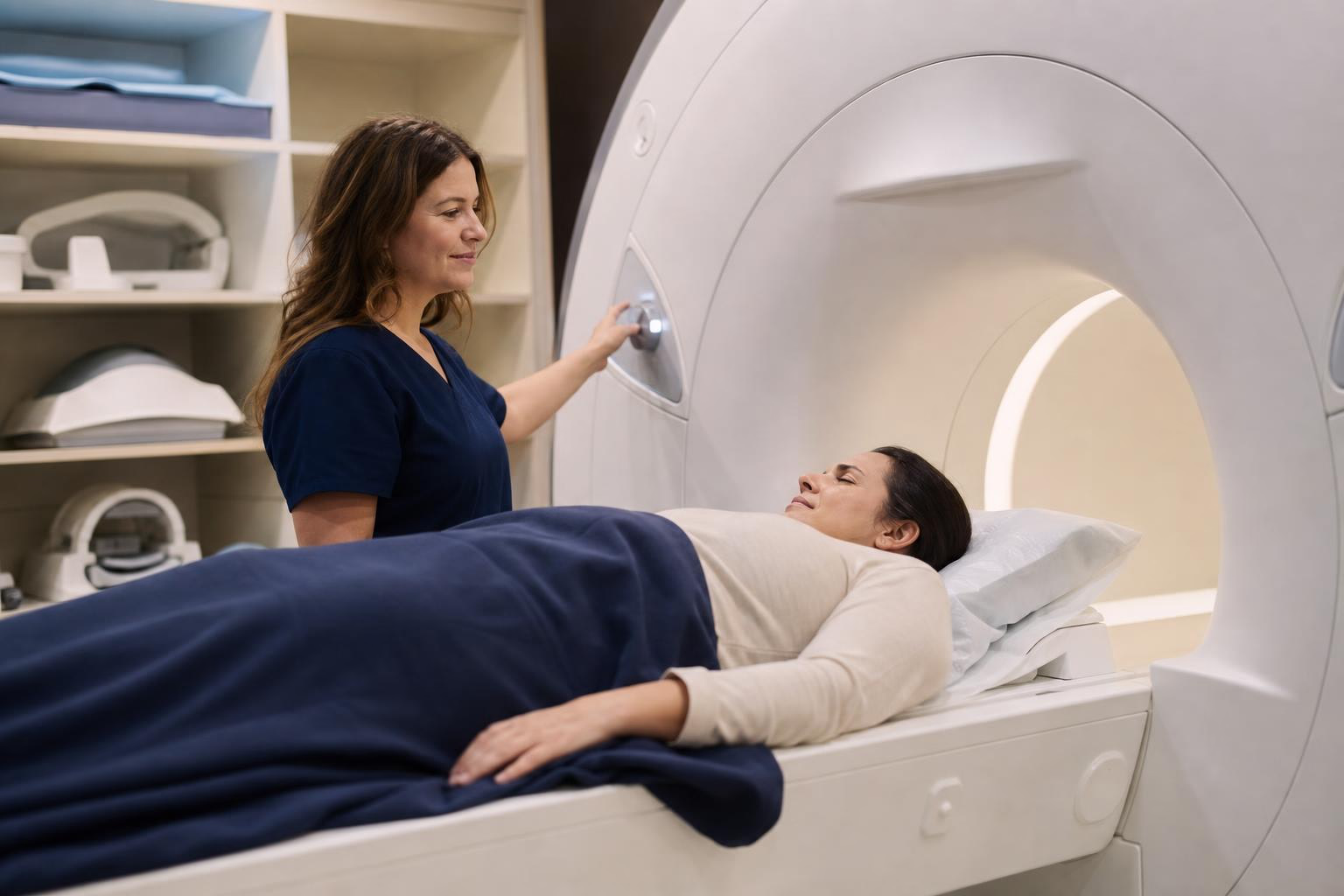
Motiva breast implants are classified as MR Conditional, meaning they are safe for MRI under standard clinical conditions (1.5-Tesla and 3-Tesla scanners). The RFID chip inside some Motiva implants creates a small artifact on MRI images that obscures roughly 3% to 5% of the implant area, but ultrasound can fill any gaps. Bring your implant card to every MRI appointment and confirm the scanner strength with your radiology team.
You just scheduled an MRI, and somewhere between the paperwork and the pre-scan questionnaire, you hit a term you weren’t expecting: “MR Conditional.” If you have Motiva breast implants, that phrase will come up. It sounds like a warning. It isn’t.
This glossary covers every technical term you’re likely to encounter when researching Motiva breast implants MRI safety, whether you’re considering breast augmentation in Denver with Motiva or you already have implants and need an MRI for any reason. Think of it as a reference you can pull up in the radiology waiting room or during your pre-surgery research.
For a full narrative walkthrough, see the companion guide on Motiva implants and MRI.
MRI Safety Classification Terms
Every device that might enter an MRI scanner room gets sorted into one of three categories under the ASTM F2503 standard. Understanding these categories is the single most important step in making sense of Motiva breast implants MRI safety.
MR Safe
An MR Safe device contains no metallic or magnetic components whatsoever. It poses no known hazards in any MRI environment, regardless of field strength. Pure silicone, certain plastics, and glass fall into this bucket. Very few implanted medical devices qualify because most contain at least trace metal.
MR Conditional
This is where Motiva implants land. MR Conditional means the device has been tested and shown to pose no hazards under specific, defined conditions. The manufacturer spells out exactly which scanner strengths, energy levels, and exposure times are safe.
Here’s the part patients miss: most modern implanted devices are MR Conditional. Pacemakers, defibrillators, cochlear implants, orthopedic screws, neurostimulators, and now breast implants with RFID technology all carry this label. It does not mean “risky.” It means “tested and cleared with rules.” For deeper context on Motiva’s overall safety profile, the FDA data on Motiva implant safety breaks down the clinical trial results.
MR Unsafe
An MR Unsafe device should never enter an MRI scanner room. Patients with MR Unsafe devices cannot be scanned. This category typically applies to older-generation implanted devices or certain ferromagnetic objects.
Why this matters for you: When your radiologist asks about implants and you say “Motiva,” the next question will be about MR Conditional labeling. Knowing that MR Conditional is the standard designation for nearly all modern implanted devices, not a red flag, helps you approach the conversation with confidence.
MRI Parameters That Matter for Motiva Implants
Motiva implants with RFID technology (Qid or Zen) are cleared for MRI under specific conditions outlined by the manufacturer. Here’s what each parameter means in plain language.
Tesla (T): Magnetic Field Strength
Tesla is the unit measuring how strong an MRI scanner’s magnetic field is. The two standard strengths used in clinical imaging worldwide are 1.5-Tesla and 3-Tesla. Motiva implants are cleared for both.
You may have heard of 7-Tesla scanners. These exist primarily in research settings and are not part of routine clinical imaging. The MR Conditional clearance for Motiva does not extend to 7T.
Practical takeaway: If you’re getting an MRI at a hospital or outpatient imaging center, the scanner is almost certainly 1.5T or 3T. You don’t need a special machine.
Specific Absorption Rate (SAR)
SAR measures how much radiofrequency energy your body absorbs during an MRI scan. It’s expressed in watts per kilogram (W/kg). Higher SAR means more energy deposited in tissue, which translates to more heat.
For Motiva implants, the limit is a whole-body averaged SAR of 2 W/kg for 15 minutes per pulse sequence, or 60 minutes of continuous scanning in Normal Operating Mode. This is the standard operating level for routine clinical MRI.
Spatial Gradient Magnetic Field
This refers to how quickly the magnetic field strength changes across space inside the scanner. Motiva implants are cleared for spatial gradients up to 4,000 gauss/cm (40 T/m). Most clinical scanners operate well within this range.
Temperature Rise During Scanning
Under the conditions listed above, Motiva implants with RFID technology are expected to produce a maximum temperature rise of 1.5°C. That’s roughly 2.7°F, which is typically imperceptible. In clinical studies, none of the patients reported local heat or discomfort during MRI examinations.
The RFID Component: Qid and Zen Explained
The reason Motiva breast implants MRI safety requires specific conditions (rather than being classified as MR Safe outright) is the optional RFID microtransponder embedded in certain implants. Understanding this component removes most of the confusion.
Q Inside Safety Technology (Qid)
Qid is the world’s first microtransponder designed for clinical use inside a breast implant. The FDA cleared the underlying RFID technology for use in 2004, and it has been available globally since 2014. More than 2.5 million Motiva implants with RFID have been placed worldwide.
The physical device is tiny: 2.1 mm wide by 9 mm long. It contains an integrated circuit and a ferrite core with a copper antenna, all sealed inside a biocompatible glass tube. This tube sits on the posterior inner surface of the implant, embedded within the silicone gel.
A handheld reader scans the transponder from outside the body, pulling up a 15-digit electronic serial number (ESN). That number links to manufacturing data: implant type, volume, production date, and related specifications. It stores no personal patient information.
One FDA trial investigator on RealSelf described the Qid as “simply an optional, passive RFID chip that is encoded with a 15-digit number that means nothing to anyone except the manufacturer.” He noted that nearly 80% of his patients opted for the chip, though the overall study average was around 30%.
How to check if you have RFID: Look at the catalogue or reference number on your Motiva Implant Card. If the number ends with the letter “Q,” your implants include Qid. No letter at the end means no RFID.
If you’re still researching implant options, the Motiva implants page covers the full product lineup and how each feature fits into your surgical plan.
Zen (Next-Generation RFID)
Zen is Motiva’s newer RFID microtransponder, designed with a non-ferrite construction specifically to reduce MRI artifact. While Qid uses a ferrite core (which interacts with the MRI’s magnetic field to create a dark void on images), Zen aims to minimize that issue. Both are MR Conditional, but Zen represents Motiva’s engineering response to artifact concerns.
Electronic Serial Number (ESN)
The ESN is the 15-digit identification code stored on the Qid or Zen transponder. It functions like a serial number on any manufactured product, except it’s readable through the skin with a handheld scanner. The ESN links back to the manufacturer’s database, where your surgeon or clinic can retrieve implant specifications. Again, it contains no patient health data or personal identifiers.
RFID Microtransponder
The general term for the small radio-frequency identification device inside the implant. “Microtransponder” just means it’s a miniature transponder: it receives a radio signal from an external reader and transmits back its stored data. It has no battery and no power source of its own. It only activates when a compatible reader is held near it.
Breast Implant Screening and Surveillance Terms
The FDA has specific recommendations for monitoring breast implants over time, and several terms come up repeatedly.
Silent Rupture
A silicone breast implant can rupture without producing any symptoms the patient can feel. No pain, no visible change in shape, no lump. This is called a silent rupture, and it’s the primary reason the FDA recommends routine imaging surveillance for all silicone breast implants, not just Motiva.
FDA Breast Implant Screening Schedule
In 2020, the FDA updated its surveillance guidelines. The current recommendation: get your first ultrasound or MRI 5 to 6 years after implant placement, then repeat screening every 2 to 3 years after that. Symptomatic patients or those with unclear ultrasound results should get an MRI sooner.
Dual-Mode Imaging
This means using both MRI and ultrasound together for comprehensive breast implant surveillance. For patients with Qid-equipped Motiva implants, dual-mode imaging is particularly valuable: MRI captures the vast majority of the implant and surrounding tissue, while ultrasound fills in any areas obscured by the RFID artifact.
Intracapsular vs. Extracapsular Rupture
When a silicone implant ruptures, the gel can either stay contained within the scar tissue capsule your body formed around the implant (intracapsular) or leak beyond that capsule into surrounding tissue (extracapsular). Intracapsular ruptures are more common and less clinically urgent, though both typically require breast implant revision. MRI is considered the gold standard for detecting both types.
Clinical Study Data: What the MRI Cohort Showed
Motiva’s FDA approval was supported by a prospective, multicenter, 10-year pivotal study (the Motiva IDE study). A subset of 218 patients underwent annual MRI at years 1, 2, and 3 to screen for implant rupture.
The results: zero implant ruptures reported. The 3-year risk of rupture was 0.0% by subject. Across the broader study population of 451 primary augmentation patients and 109 revision patients, device-related complications remained below 1%.
These numbers don’t mean rupture can never happen. All breast implants carry some long-term rupture risk. But a 0% rate at 3 years in a dedicated MRI surveillance cohort is a strong data point for Motiva breast implants MRI safety.
Since FDA approval for breast augmentation in September 2024, more than 60,000 Motiva implants have been sold in the United States. Globally, nearly 4 million Motiva devices have been delivered since 2010.
Motiva Implant Product Terms
You’ll encounter several branded technologies when researching Motiva implants. Here’s what each one refers to.
SmoothSilk Surface
Motiva’s proprietary implant shell texture. Unlike traditional textured or smooth surfaces, SmoothSilk uses a nano-level surface designed to promote biocompatibility while minimizing the risk of complications associated with heavily textured shells.
Ergonomix
Motiva’s implant designed to shift shape with body position, similar to natural breast tissue. It holds a more projected shape when standing and flattens when lying down. This is the implant line most commonly discussed in the context of natural-looking results. For a breakdown of profiles and sizing, the Motiva implants chart covers the full range.
BluSeal Barrier Technology
A visual safety layer built into the implant shell. BluSeal adds a translucent blue tint to the outer surface, making it easier for surgeons to identify any potential weak spots or micro-defects in the shell during and after placement.
ProgressiveGel
The silicone gel formulation used inside Motiva implants. It’s designed to mimic the feel of natural breast tissue more closely than traditional cohesive gels, while maintaining structural integrity to minimize gel migration in case of shell compromise.
Other implant brands like Sientra and Natrelle do not include RFID technology, so their MRI considerations differ. Patients comparing brands should factor in both the traceability benefits of RFID and the artifact tradeoff.
Regulatory Terms You Might See
FDA PMA (Premarket Approval)
The most rigorous pathway for medical device approval in the United States. Unlike the faster 510(k) clearance process, PMA requires clinical trial data demonstrating safety and effectiveness. Motiva implants received PMA in September 2024 after a multi-year pivotal study with years of follow-up data.
IDE (Investigational Device Exemption)
The FDA authorization that allows a device manufacturer to conduct clinical trials in the U.S. before the device has been approved. Motiva’s IDE study is the 10-year prospective trial that generated the data supporting their PMA application.
ASTM F2503
The specific standard (published by ASTM International, formerly the American Society for Testing and Materials) that defines the three MRI safety categories: MR Safe, MR Conditional, and MR Unsafe. When a radiologist or MRI technician checks whether your implant is “MRI compatible,” they are referencing this standard.
What to Tell Your Radiologist: A Practical Checklist
This is the section to bookmark for your appointment day. When you arrive for an MRI with Motiva breast implants, communicate the following:
State that you have breast implants. Specify Motiva brand.
Confirm whether your implants contain RFID. Check your implant card. If the reference number ends in “Q,” you have Qid.
Bring your Motiva Implant Card. Hand it to the technologist. It contains the reference number, serial information, and implant specifications.
Confirm the scanner is 1.5T or 3T. It almost certainly is, but confirming eliminates ambiguity.
For MRIs of other body parts (knee, brain, spine), the implant’s MR Conditional status still applies. Inform the team, but the artifact concern is limited to breast imaging only.
If you have questions about how your specific implants interact with MRI or want to discuss implant options before surgery, scheduling a consultation is the most direct way to get personalized answers.
Frequently Asked Questions
Can I get an MRI if I have Motiva breast implants?
Yes. Motiva implants are classified as MR Conditional and are cleared for MRI at 1.5-Tesla and 3-Tesla, which covers virtually all clinical MRI scanners. No special equipment is needed.
Will the RFID chip in my Motiva implant cause problems during an MRI?
The RFID (Qid) creates a small dark spot on MRI images called a susceptibility artifact. It obscures approximately 3% to 5% of the implant area depending on size. It does not cause pain, heating you can feel, or any danger during the scan.
How do I know if my Motiva implants have the RFID chip?
Check the reference number on your Motiva Implant Card. If it ends with the letter “Q,” your implants include Qid technology. No letter means no RFID.
What is the difference between MR Safe and MR Conditional?
MR Safe means a device has zero metallic components and is safe in any MRI environment. MR Conditional means the device has been tested and cleared for MRI under defined parameters (specific scanner strength, energy levels, and time limits). Most modern implanted medical devices, including pacemakers and orthopedic hardware, are MR Conditional.
How often should I get an MRI after breast augmentation?
The FDA recommends the first ultrasound or MRI at 5 to 6 years after silicone implant placement, then every 2 to 3 years thereafter. Symptomatic patients should be imaged sooner.
Did Motiva implants show any ruptures in clinical MRI testing?
In the FDA pivotal study, 218 patients underwent annual MRI for three years. The rupture rate was 0.0%. No implant ruptures were detected in the MRI cohort.
What is the Zen RFID, and how is it different from Qid?
Zen is Motiva’s next-generation microtransponder, built with a non-ferrite construction designed to reduce the MRI artifact that Qid produces. Both are MR Conditional and serve the same traceability function.
To explore whether Motiva implants are right for your goals, or to discuss MRI safety with a Harvard trained plastic surgeon, request a consultation with Dr. Leela Mundra. Learn more about what to expect at your visit.